
Reviewed · PALERMO HISTORIC CENTER WALKING TOURS
Discover Palermo in 3 hours. Art, history, markets and street food
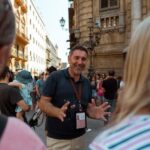
Three hours, and Palermo clicks. This tight walking tour strings together Capo Street Market, the Palermo Cathedral, and the city’s biggest squares with a local guide telling the backstories that make the monuments feel alive. You get a guided hit of art, history, and street food culture without needing a full day.
I love the way it balances food and famous sights. The Capo market stop gives you real Palermo energy, and the Cathedral delivers serious UNESCO-level history in a short time. The only real drawback is the language: it is only in Italian, so if your Italian is shaky, you may miss parts of the story even if the buildings are still worth seeing.
In This Review
- Key highlights (what makes this tour special)
- A smart 3-hour Palermo intro on foot
- Capo Street Market: Arab roots, daily hustle, and taste-first sightseeing
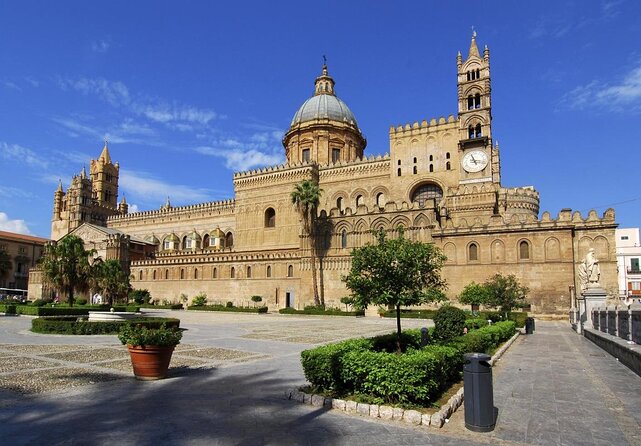
- Palermo Cathedral: Norman-Arab art and the stories inside 1185
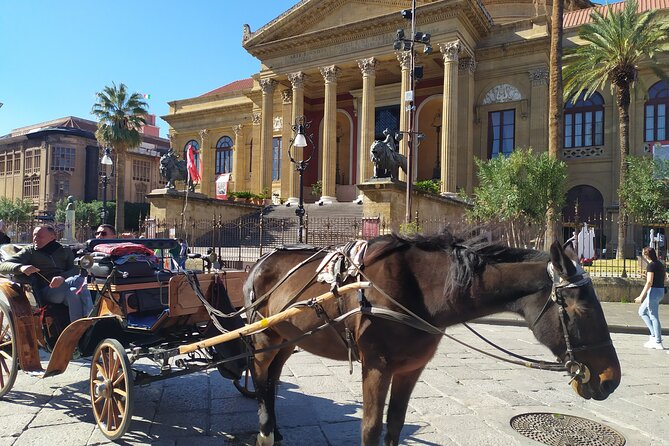
- Belle Epoque Palermo: Teatro Massimo, Quattro Canti, and the Florio connection
- Fontana Pretoria: Carrara marble sculpture and the Fountain of Shame
- Piazza Olivella and Piazza Bellini: churches with Arab influence and real historic texture
- Opera dei Pupi and the Cassaro: myth, performance, and Palermo’s oldest street
- Cannoli and coffee: where this walk helps you eat like a local
- Price and value: what $34.76 buys you
- Who this tour is best for (and who should skip it)
- Should you book this Palermo walking tour?
- FAQ
- How long is the tour?
- Is Palermo Cathedral ticket included?
- Does the tour include food?
- Is the tour only in Italian?
- Where does the tour start and end?
- How many people are in the group?
- What’s the cancellation policy?
Key highlights (what makes this tour special)
- Capo Street Market in the morning rhythm with a guided entry and food tastings to match the vibe
- Palermo Cathedral (1185), part of the Arab-Norman UNESCO itinerary, with key sights inside
- Teatro Massimo and the Florio dynasty stories as you pass through the Belle Epoque heart
- Quattro Canti and Fontana Pretoria explained in plain human terms, including the Fountain of Shame nickname
- Piazza Bellini and the Norman/Arab-style church trio area on one logical walking chain
- Opera dei Pupi culture via the Teatro dell’Opera dei Pupi and a look at Palermo’s traditional performance world
A smart 3-hour Palermo intro on foot
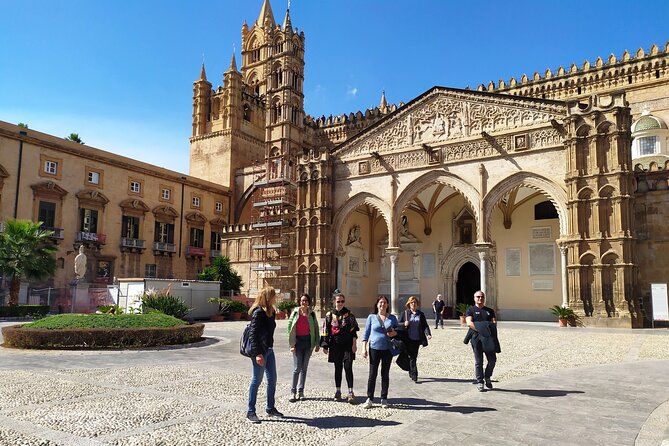
If you’re short on time, Palermo can feel like a maze. This walk is designed to give you a clean first map of the historic center, so the rest of your days feel less random. You’re moving through the places most people point at later on a self-guided stroll, but you’re doing it with context—why a square exists, what a building signals, and what stories locals attach to them.
The pace is also practical. The tour is about 3 hours and stays focused on the downtown core. It’s also a nice fit for cruise passengers because the meeting area is close to the port area, meaning less wasted time on getting from ship to sights.
One thing I’d plan around: you’ll do a lot of walking on sidewalks and through lively areas. It’s not a sit-down museum day. Wear shoes you trust, and expect normal city-street movement.
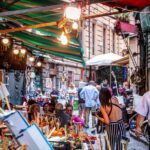
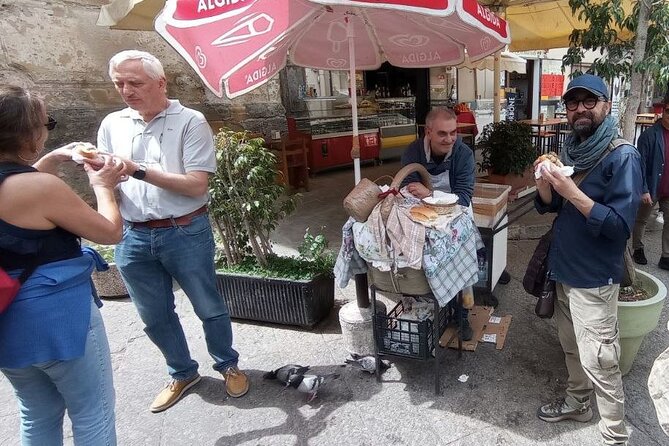
Back into Ballaro and the Vucciria for arancine, panelle and sfincione.
Capo Street Market: Arab roots, daily hustle, and taste-first sightseeing
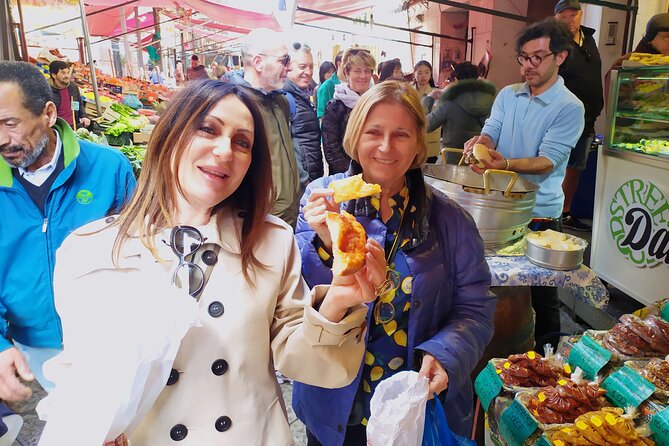
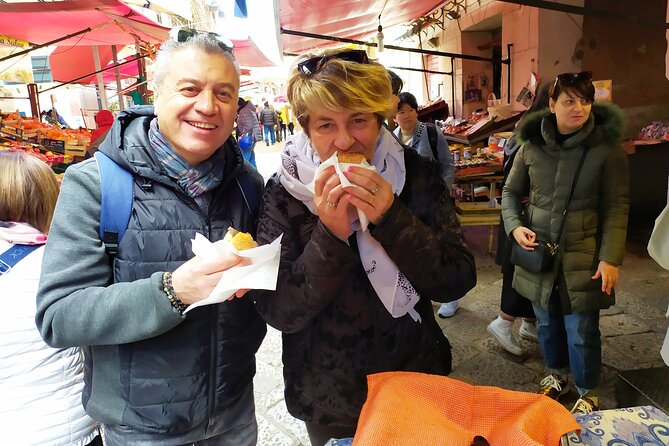
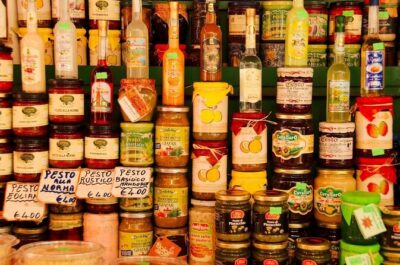
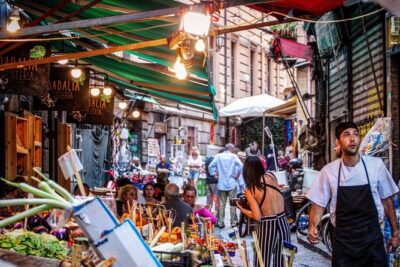
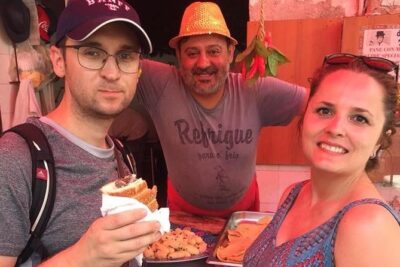
Capo Street Market is the kind of place that turns your head the moment you enter. This is an ancient food market area of Arab origin, set along Via Porta Carini and Via Bandiera. Even if you don’t eat much, it’s still a sensory education in what daily Palermo feels like.
What makes the market stop work in a short tour is the structure:
- You get admission included, so you’re not scrambling for access.
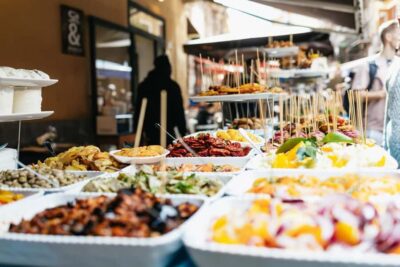
- There are free tastings of food and drinks so you can sample the local rhythm without paying for a full meal on the spot.
This is also where you start learning Palermo’s “social geography.” You see how the city organizes around food, and you get a sense for what’s considered worth doing in the moment—buying, nibbling, chatting, watching. And because you’re with a guide, you’re not stuck guessing which stall is doing the good stuff.
If you have food allergies or dietary restrictions, you’ll want to communicate carefully during tastings, because the tour data only promises tastings—not a guaranteed full menu or allergy-safe options.
Palermo Cathedral: Norman-Arab art and the stories inside 1185
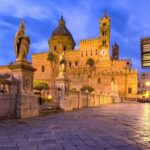
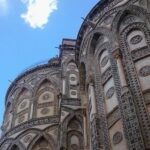
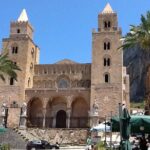
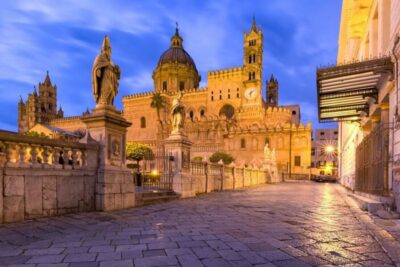
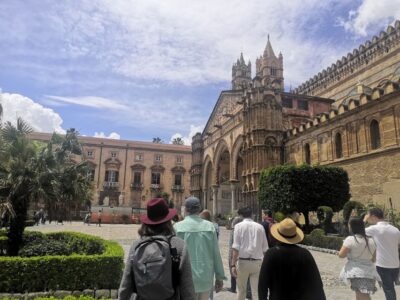
Palermo Cathedral is one of those stops that makes the whole city make more sense. The tour focuses on the basics you’ll actually want later when you talk about Palermo’s identity: the Cathedral was built in 1185 and is a Norman-Arab art masterpiece. That blend is the heart of the city’s UNESCO significance through the Arab-Norman itinerary (with Monreale and Cefalù included since 2015).
Inside, the highlights you’ll hear about include:
- Royal tombs
- The chapel of Santa Rosalia
- An extraordinary sundial
- Other works of art that explain why this isn’t just a pretty church stop
The practical win here: entry is included in the tour price. You’re getting a real “major site” experience without paying extra just to see the core interior.
Also, the tour framing helps. Instead of treating the Cathedral as a static monument, it’s presented as part of a living story—how Palermo’s rulers, saints, and identities show up in stone. If you like learning what you’re looking at, this is where the guide’s storytelling adds real value.
Belle Epoque Palermo: Teatro Massimo, Quattro Canti, and the Florio connection
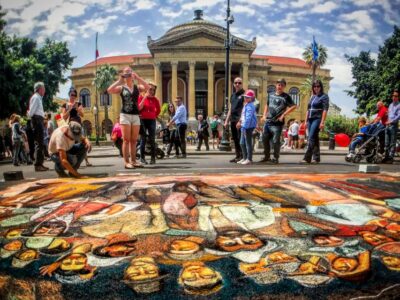
After the Cathedral, the walk shifts into Palermo’s dramatic public face. You’ll reach Piazza Giuseppe Verdi (Piazza Massimo) and pass the Teatro Massimo, described as Italy’s largest theater. The focus here isn’t just architecture. The tour connects it to the Belle Epoque era and the Florio family, including the kinds of events associated with the theater and why the Florios mattered locally.
Then comes Quattro Canti, a scenographic baroque square that sits at the center of the ancient city. It’s the kind of place you can easily see and forget—unless you know what you’re looking at. The guide’s job is to explain how Palermo built a city-center stage, and why the square feels theatrical even when traffic and daily life swirl around it.
A good sign you chose the right tour for your style: when you look at a square and start noticing details instead of just taking photos. Quattro Canti is perfect for that “wait, look at that” moment.
Fontana Pretoria: Carrara marble sculpture and the Fountain of Shame
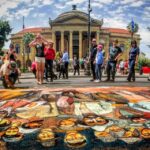
One of Palermo’s most talked-about public sights is Piazza Pretoria and its fountain, the Fontana Pretoria. This tour gives you the main reason Palermitans nickname it the Fountain of Shame.
Here’s what matters visually and historically:
- The fountain consists of 48 statues of white Carrara marble.
- The sculpture was done in the Renaissance by Tuscan sculptors.
- It was purchased in 1573, which is part of why it became part of local myth and nickname culture.
In a standard guidebook, you’d get the description and maybe a quick fact line. In this walking format, you also get the “why it’s named that” angle—which makes it more fun to stand there and actually interpret what you’re seeing.
This is also a great pause point in the tour. You get a chance to stop, look, and reset before more church-and-square exploring.
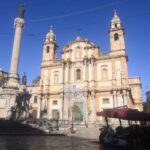
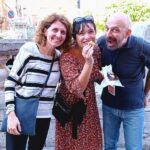
More of the old centre on foot, from the Quattro Canti to the markets.
Piazza Olivella and Piazza Bellini: churches with Arab influence and real historic texture
From Piazza Pretoria, you move toward Piazza Olivella, where the Baroque church of Sant’Ignazio and an Archaeological Museum anchor the area. Even though the tour data doesn’t promise museum entry, the guiding value is still strong here because it helps you understand what the square represents in the city layout and why the church matters.
Then you continue to Piazza Bellini, another high-value hub for historic Palermo. This square is framed by multiple important buildings, including:
- The Church of the Martorana (12th century)
- The Arab-style church of San Cataldo
- The Church and Monastery of Santa Caterina
What I like about how this part is handled: it doesn’t treat these churches as isolated “checkpoints.” You’re led through a visual sequence where the architecture differences start to feel meaningful. That matters because Palermo’s identity is built on layers—Norman, Arab, Renaissance baroque—and you can only really understand it by seeing how styles sit side by side.
If you’re the type who enjoys comparing details—arches, ornament style, how a facade looks—you’ll probably enjoy this section a lot. If you mainly want big highlights with minimal stops, you might find the church concentration slightly intense. But the time window stays tight.
Opera dei Pupi and the Cassaro: myth, performance, and Palermo’s oldest street
Two culture-heavy pieces round out the walk.
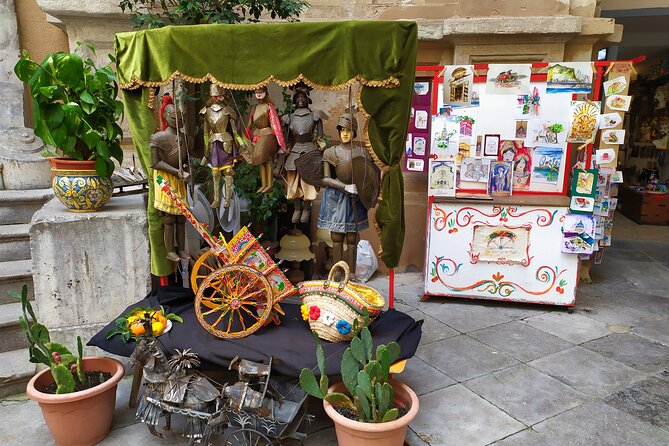
First, there’s Teatro dell’Opera dei Pupi, tied to Mimmo Cuticchio. The tour describes it as a typical Palermo show dating back to 1800, and notes it as UNESCO heritage. Even if you don’t catch a full performance, the idea here is that Palermo isn’t only cathedrals and palaces—its identity includes traditional puppetry and local theater culture.
Second, the route includes the ancient Cassaro, described as the oldest street in Palermo with palaces, churches, and convents. This is one of those details that turns a walk into a real city study. When you know you’re traveling along the older spine of the town, all the surrounding buildings start feeling less random.
And woven through the Cassaro area, you also get the tour’s storytelling thread: the Beati Paoli (a mysterious sect), the miracles of Santuzza, and the terrible murder of the Baroness of Carini. If you like ghost-story style history—local legend treated like part of the city’s emotional memory—this is the section that will stick with you.
Cannoli and coffee: where this walk helps you eat like a local
The tour includes one major practical promise: you’ll be told where to eat the best cannoli and drink the best coffee in the world. The details aren’t listed in the tour summary, so you should expect recommendations rather than a scripted meal stop.
What you can count on: this is where the guide’s local knowledge is meant to pay off after the walk ends (since the tour ends at Piazza Bellini). If you plan your free time right, you can go straight from storytelling squares into real food decisions with less guessing.
Because the tour only includes free tastings (not full food and drinks), I treat this as a “taste and direction” experience. You sample during the organized stops, then you use the guide’s suggestions to guide the rest of your eating.
Price and value: what $34.76 buys you
At $34.76 per person, this tour is priced like an efficient city orientation plus a couple of key included entrances. Here’s the value math that matters:
- Entrance to Capo Market is included
- There are free tastings of food and drinks
- Palermo Cathedral entry is included
- You also get a strong set of major outdoor landmarks, with theater and fountain context rather than just standing and snapping photos
- Guide in Italian is included
Not included: food and drinks beyond the free tastings, and there’s no promise of museum or palace tickets besides the Cathedral.
So, is it worth it? If you want a first structured look at Palermo’s historic center plus local guidance on where to eat, yes. This is a cost-effective way to compress a lot of sights and stories into a manageable chunk of time—especially if you’re trying to avoid paying separately for every major site.
If you’re non-Italian speaking or you’re looking for multiple museum entries, you might feel the “what’s included” list is too short. But for a walking, story-driven approach, it’s solid value.
Who this tour is best for (and who should skip it)
This walk is best for:
- First-timers who need a clean orientation fast
- People who enjoy stories and local myth alongside the big monuments
- Cruise passengers who want a short, high-impact historic center route
- Anyone who wants to practice or improve Italian in a real-world setting, since the tour is only in Italian
It may be a weaker fit for:
- Anyone who needs full English narration and can’t follow Italian stories closely
- Travelers who want lots of museum interiors beyond the Cathedral (the emphasis here is walking, squares, and select included entry)
Should you book this Palermo walking tour?
I think this is a smart pick if your priority is feeling like you understand Palermo’s layout and identity after a short visit. The combination of Capo Market, Palermo Cathedral, major squares like Quattro Canti and Piazza Pretoria, plus the Teatro Massimo and performance culture thread gives you a real snapshot. Add the cannoli/coffee guidance, and you get a useful “before lunch / after-lunch” advantage.
If your Italian is strong—or you’re willing to use the tour as both a sightseeing and language experience—book it. If you’re not comfortable with Italian narration, I’d think twice, because the tour’s value is heavily tied to the stories the guide tells.
FAQ
How long is the tour?
It lasts about 3 hours.
Is Palermo Cathedral ticket included?
Yes. Entrance to Palermo Cathedral is included in the price.
Does the tour include food?
Food and drinks are not fully included, but there are free tastings provided at stops.
Is the tour only in Italian?
Yes. The tour is only in Italian.
Where does the tour start and end?
It starts at Via Cavour, 135, 90139 Palermo PA and ends at Piazza Bellini, 90133 Palermo PA.
How many people are in the group?
The group size is capped at a maximum of 16 travelers.
What’s the cancellation policy?
You can cancel for a full refund if you cancel at least 24 hours in advance of the experience start time. If you cancel less than 24 hours before, the amount paid is not refunded.
More Tour Reviews in Palermo
More Palermo Old Town Walks
More Palermo Street Food and Market Walks
After something else? More tours and day trips around Palermo and western Sicily




Palermo Historic Center Walking Tours, compared.
 ★ 4.8NO Mafia Walking TourFrom $402,431 reviews
 ★ 5.0Palermo Original Street Food Walking Tour by StreatyFrom $832,105 reviews
 ★ 4.9Street Food and History Walking TourFrom $541,294 reviews
 ★ 5.0Palermo No Mafia walking tour: discover the Anti-mafia culture in SicilyFrom $391,011 reviews
 ★ 4.7Private Custom Walking Tour with Local GuideFrom $53661 reviews
 ★ 4.9Street Food Walking Tour with Local Guide & TastingFrom $52632 reviews
 ★ 5.0Palermo Walking Tour and Street FoodFrom $48617 reviews
 ★ 4.8UNESCO World Heritage Sites Guided Walking TourFrom $41548 reviews
Browse the lists this tour appears in