
Reviewed · PALERMO HISTORIC CENTER WALKING TOURS
Scopri il Cuore di Palermo: arte, monumenti e mercati
Palermo’s stories start on the sidewalk, and this 2-hour tour threads art, monuments, and street food into one easy route through the historic center. You’ll move from grand landmarks to local markets while your guide explains how Palermo got shaped over time.
I especially like the mix of big-ticket sights (Teatro Massimo and the UNESCO Cathedral) with the everyday energy of Capo Market. I also like how the tour ties myths and religion to what you’re seeing, so Santa Rosalia and other legends feel connected to the city’s identity.
The main drawback is pacing: it’s only two hours, so you’ll see key highlights rather than spend long stretches inside museums or pay-to-enter monument spaces.
In This Review
- Key highlights worth your time
- How the tour feels in practice: history that walks with you
- Where it starts: Via Cavour and getting your bearings
- Sant’Ignazio and the archaeology you’ll actually remember
- Teatro Massimo: the glamour, the Florios, and the ghost-story energy
- Beati Paoli, pirates, crocodiles: why the legends fit Palermo
- Capo Market: Arab-origin streets and food you can plan around
- The Palermo Cathedral moment: UNESCO layers in one powerful view
- Price and value: is $23 worth a 2-hour guided route?
- Who this tour suits best
- What to do right after: use the guide’s food tips wisely
- Should you book this tour?
- FAQ
- How long is the tour?
- What is included in the ticket price?
- Where do I meet the guide?
- What language is the tour in?
- Do I need to bring money for food?
- Is the Cathedral entrance covered?
Key highlights worth your time
- Teatro Massimo: the largest opera house in Italy, plus Belle Époque Palermo and Florio-family storytelling
- Santa Rosalia: the patron saint’s plague-fighting miracles explained as living city memory
- UNESCO Palermo Cathedral: history layered from pagan temple to mosque to Christian church
- Capo Market street food zone: tastings and local dessert stops built into the walk
- Palermo legend sampler: Beati Paoli, plus the entertaining pirate/crocodile-style stories your guide will bring up
- Food and nightlife tips: practical guidance for where to eat, drink, and wander after the tour
How the tour feels in practice: history that walks with you
This is the kind of Palermo experience that works because it stays human. You’re not just looking at monuments from afar—you’re learning what changed, who benefited, and why certain beliefs took hold. The route is built to keep turning the city into something you can picture.
You’ll also get a strong sense of Palermo as a crossroads city. The guide’s explanations connect major architecture to different eras, then you switch gears to the markets where you can taste daily life. That contrast is the point.
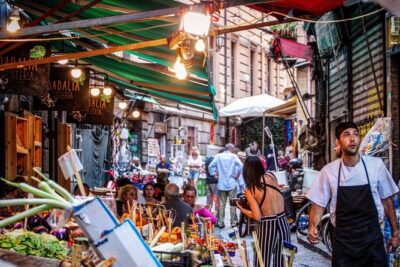
More of the old centre on foot, from the Quattro Canti to the markets.
Where it starts: Via Cavour and getting your bearings
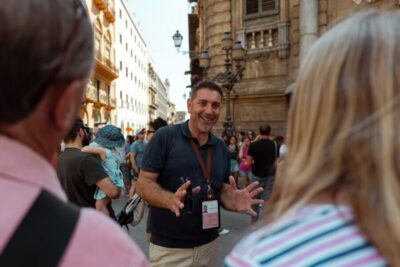
Meeting point is Via Cavour 133A, in front of Banca d’Italia, where the guide will be recognizable with a badge (tesserino di riconoscimento). This matters because Palermo’s center can feel like a web of streets, and a clear start helps you enjoy the walk instead of studying maps.
The tour is Italian, live-guided, and designed for a 2-hour timeframe. Plan to show up a few minutes early so the group can roll on time and you don’t lose momentum.
Sant’Ignazio and the archaeology you’ll actually remember
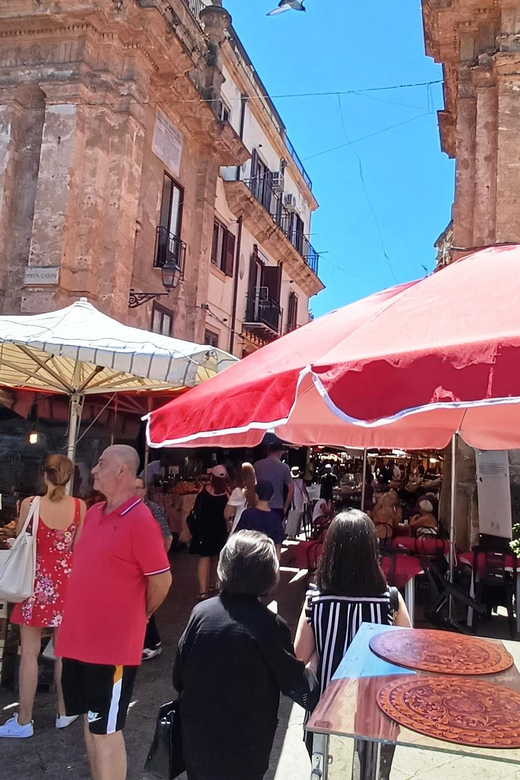
The tour begins at a scenic square featuring Sant’Ignazio, tied to an archaeological museum. Even if you don’t stay long in any one interior, the value here is how the guide sets the scene: Palermo didn’t appear fully formed. Layers of belief, conquest, and local power left traces you can still recognize.
Why this stop works:
- It gives you a foundation before the tour jumps to the big, showy landmarks.
- It’s a calm entry point—good if Palermo’s streets feel loud and overwhelming at first.
One practical note: entrances to museums and monuments are not listed as included, so if you want to go inside beyond what the tour covers, you may need tickets.
Teatro Massimo: the glamour, the Florios, and the ghost-story energy
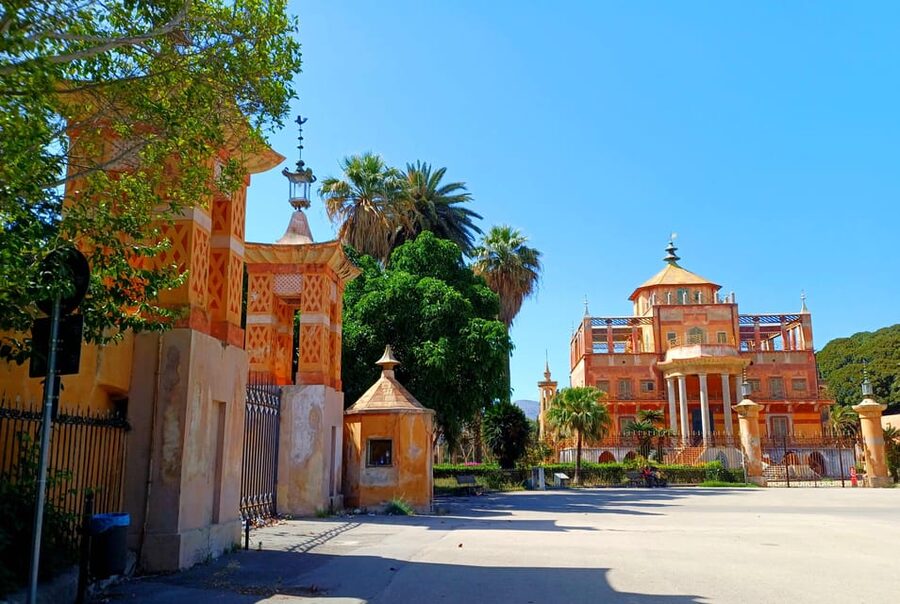
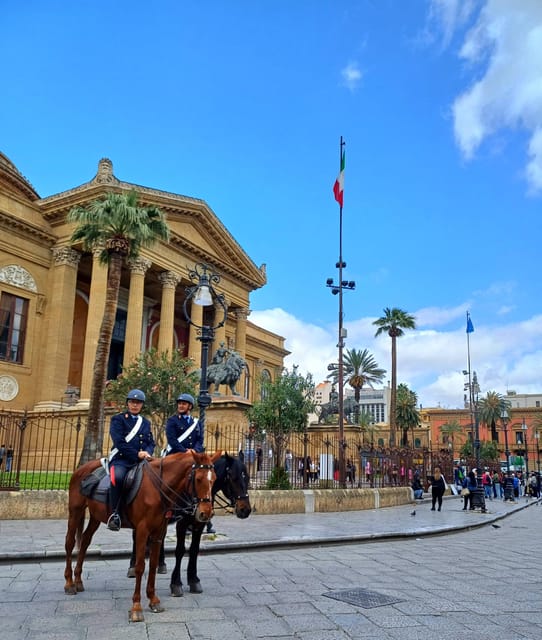
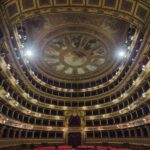
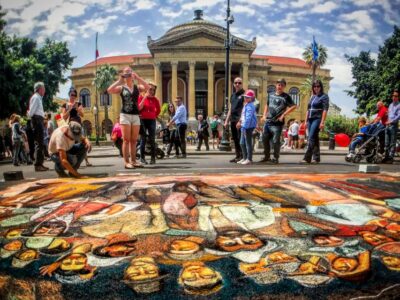
Then you hit Teatro Massimo, the largest opera house in Italy. This is one of those places where the building itself does half the storytelling. Your guide connects it to the Belle Époque Palermo vibe and specifically to the Florio family, the power behind much of the era’s wealth and culture.
What I like about this part of the tour is that it doesn’t treat opera as museum-only culture. It frames Teatro Massimo as a symbol—of money, influence, and prestige—built in a city that has always juggled multiple identities.
You’ll also hear the ghostly legends surrounding the theatre. That might sound like pure fun, but it actually helps your brain remember. When a story sticks, the architecture sticks too: you start seeing the theatre as a living character in Palermo’s narrative.
Beati Paoli, pirates, crocodiles: why the legends fit Palermo
Along the way, you get the myth layer. The guide brings up stories like the Beati Paoli—a mysterious sect tied to Sicilian legend—and you’ll also hear about Santa Rosalia, Palermo’s patron saint, often called La Santuzza.
Then comes the playful mix: pirates, crocodiles, and other strange-sounding city tales. The key is not whether every detail is historically provable. The key is how Palermo uses story to express fear, faith, and local values. Legends help explain what people believed mattered enough to repeat for centuries.
If you like tours that don’t just list dates, this section is a strong match. You’ll walk with context that makes the next landmark feel less random.

Capo Market: Arab-origin streets and food you can plan around
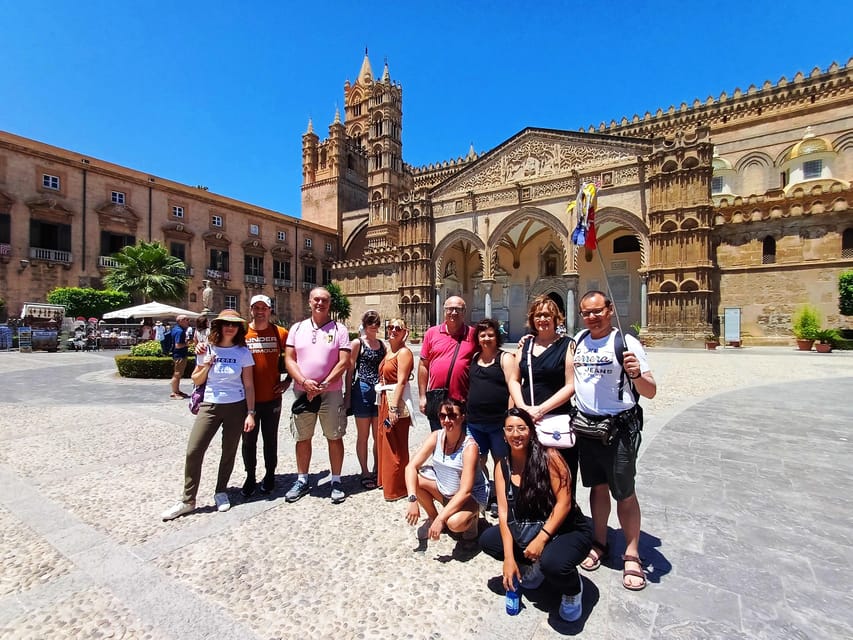
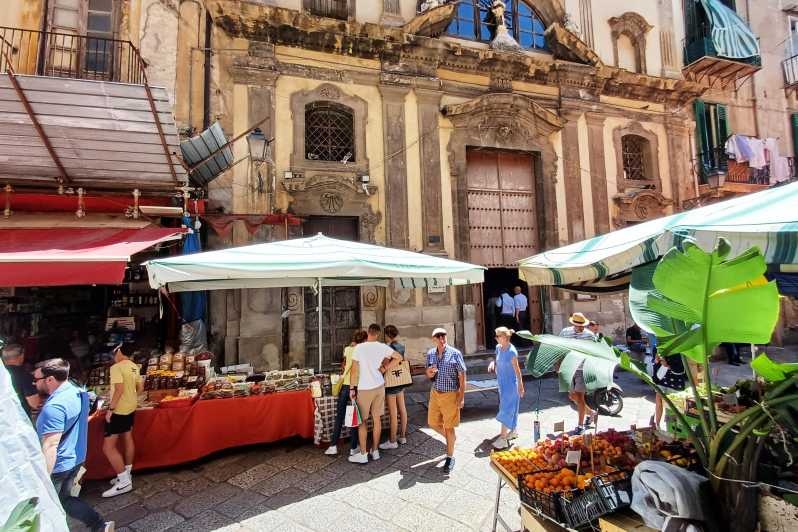
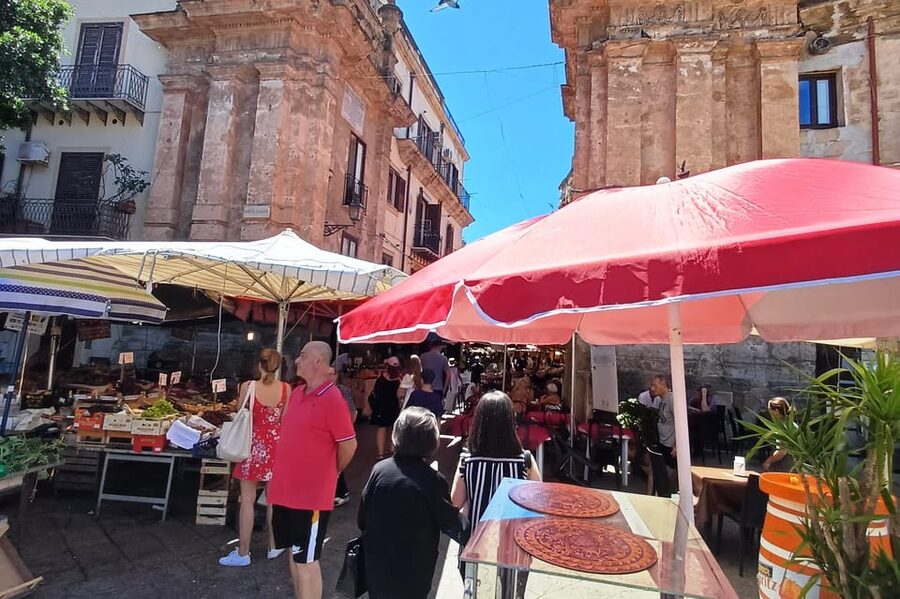
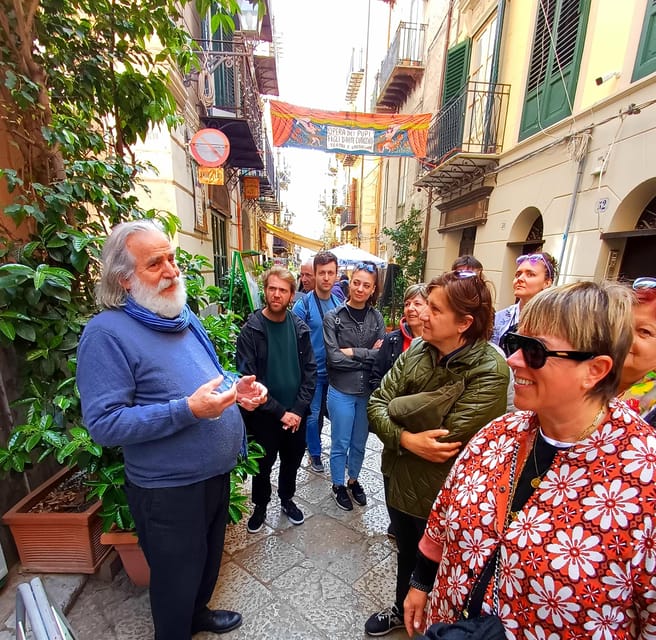
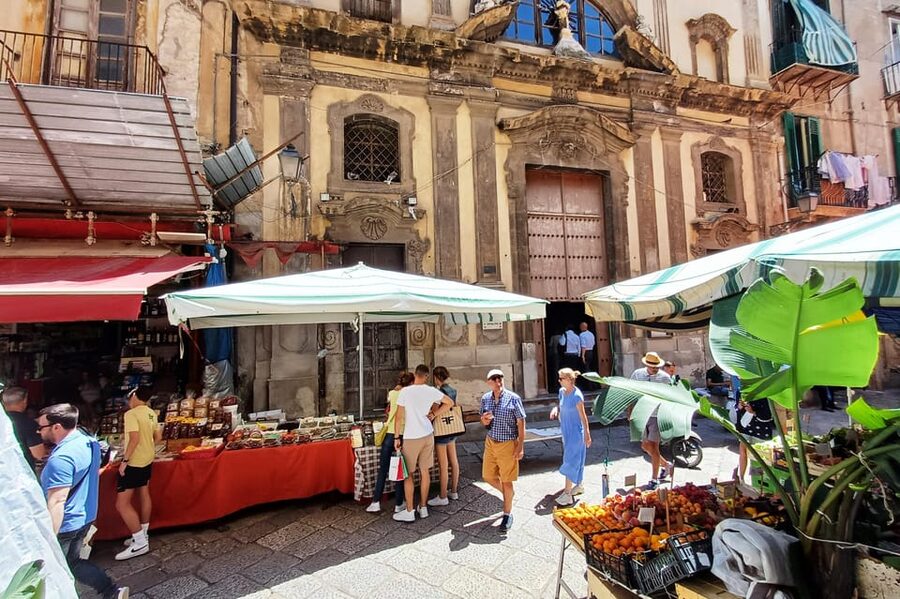
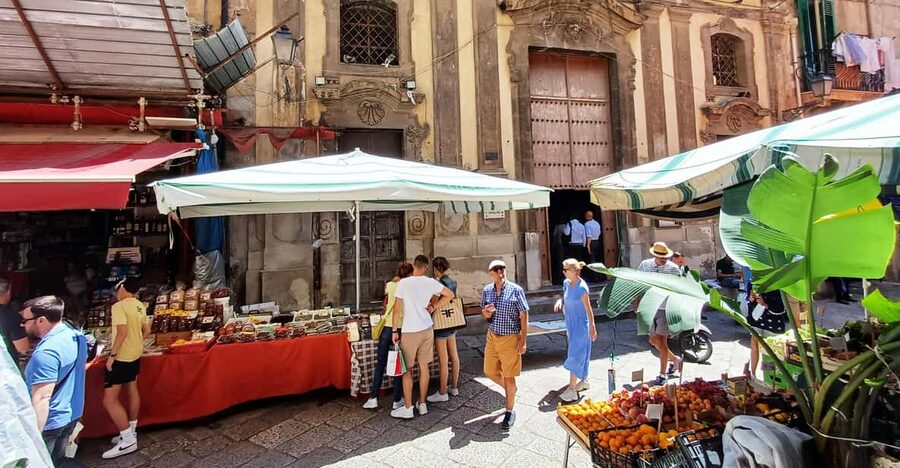
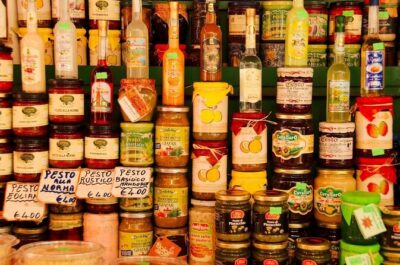
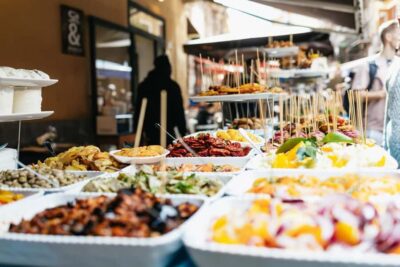
After the monuments and myths, you shift into real neighborhood life at Capo Market, described as being of Arab origin. This is where the tour becomes practical. You’re not only learning—you’re getting ready for the meal part of your trip.
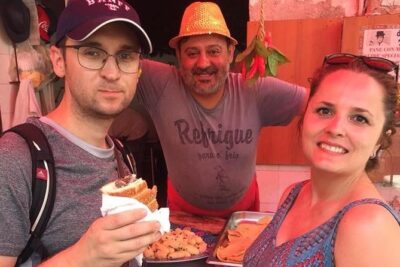
You’ll have the chance to taste local Sicilian treats connected to the guide’s food recommendations. The tour specifically highlights street food tied to Arianna Dainotti, winner of Alessandro Borghese’s 4 Restaurants. That’s useful because it’s not just “try something good”—it’s pointing you toward a recognizable quality story.
The market stop also includes Sicilian desserts linked to the Angeliche. If you’re the type who likes to taste your way through a city, this is the most satisfying switch from storytelling to doing.
One thing to keep straight: food and drinks aren’t included in the tour price. The tour sets you up with what to look for and what to try, but you’ll likely pay as you sample.
The Palermo Cathedral moment: UNESCO layers in one powerful view
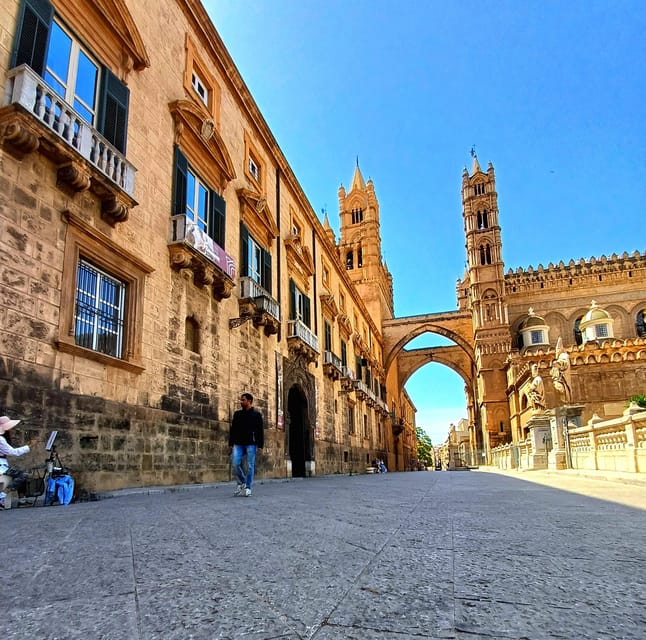
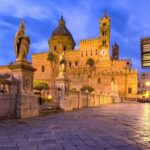
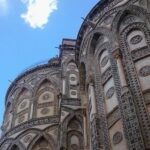
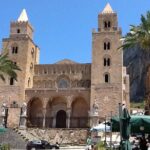
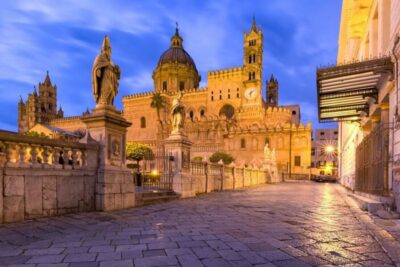
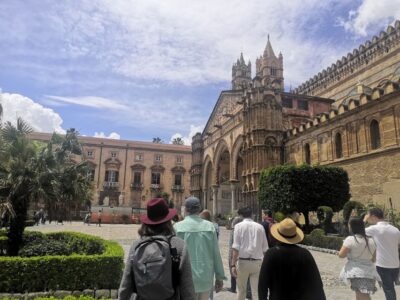
The finish is at Palermo Cathedral, a UNESCO site dating back to the early 12th century. This stop is big for two reasons: the architecture tells a timeline, and the Cathedral’s details force you to pay attention.
Here’s the transformation your guide will highlight:
- It was once a pagan temple
- then a mosque
- then became a Christian church
Seeing that evolution matters because Palermo’s identity is built on change, not on one single storyline. The city didn’t stop evolving after one era. It re-used sacred spaces and reinterpreted them.
You’ll also see and learn about the Cathedral’s iconic elements:
- the bell towers
- the tombs of kings and emperors
- and a spectacular sundial
There’s also a simple practical advantage: entry to the Cathedral is free as part of the tour. That makes the final stop feel more “worth it” when you’re counting value.
Price and value: is $23 worth a 2-hour guided route?
At about $23 per person for 2 hours, the value is strongest if you want direction. You’re paying for:
- a licensed local guide (not just a self-walk map)
- a route that strings together major sights in a way that actually makes sense
- and a meaningful Cathedral component with free entry
Since hotel pickup isn’t included and food/drinks aren’t included, you’ll still spend extra for meals if you’re sampling in the market. Also, some museum and monument entrances may not be covered. So I’d treat $23 as the cost of the guided perspective, not the cost of every ticket and snack.
But for what you get—Teatro Massimo, Santa Rosalia/Beati Paoli legend context, Capo Market street-food pointers, and the UNESCO Cathedral—it’s a solid deal for a short day plan. Especially if you’re only in Palermo for a limited number of hours.
Who this tour suits best
I’d point you to this tour if:
- you want a guided overview that turns landmarks into a connected story
- you’re interested in how religions and cultures overlap in Palermo
- you enjoy learning myths and legends alongside what’s carved in stone
- you want practical recommendations for where to eat and what to do at night after the walk
You might want a different format if you’re the kind of traveler who wants to spend long stretches inside museums or who dislikes any mention of legends/past stories that mix fact and folklore.
What to do right after: use the guide’s food tips wisely
One reason I like tours that end in the Cathedral area is that they give you a starting point for the rest of your evening. The guide promises best tips on restaurants, cafes, ice cream parlors, and nightlife, which is exactly what you want once you’re done walking.
My practical advice: pick one “sure thing” you can reach easily and one “maybe” option based on whatever you feel like—sweet dessert in the market mood, or a proper sit-down meal if you’re tired. Either way, you’ll be using what the guide taught you instead of wandering blind.
Should you book this tour?
Yes, if you want a fast, story-driven way to understand Palermo’s heart without spending your whole day on logistics and indecision. The standout strengths are the engaging guide performance (including Claudio’s reputation for being involved and professional), the clear connection between Palermo’s transformations and what you see on the street, and the way the route blends monuments with the Capo Market food atmosphere.
If your time is limited, this kind of 2-hour guided run is an efficient way to get your bearings. Just be ready to pay for food and any extra entrances you choose to add.
FAQ
How long is the tour?
It lasts about 2 hours.
What is included in the ticket price?
You get a local, licensed guide, and free entry to the Palermo Cathedral. Entrance tickets for other museums and monuments, plus food and drinks, are not included.
Where do I meet the guide?
Meet at Via Cavour 133A, in front of Banca d’Italia. The guide will have a recognition badge.
What language is the tour in?
The tour is conducted live in Italian.
Do I need to bring money for food?
Food and drinks are not included, but the route includes market time and opportunities to taste local specialties.
Is the Cathedral entrance covered?
Yes. Cathedral entry is included as free.
More Tour Reviews in Palermo
More Palermo Old Town Walks
After something else? More tours and day trips around Palermo and western Sicily




Palermo Historic Center Walking Tours, compared.
 ★ 4.8NO Mafia Walking TourFrom $402,431 reviews
 ★ 5.0Palermo Original Street Food Walking Tour by StreatyFrom $832,105 reviews
 ★ 4.9Street Food and History Walking TourFrom $541,294 reviews
 ★ 5.0Palermo No Mafia walking tour: discover the Anti-mafia culture in SicilyFrom $391,011 reviews
 ★ 4.7Private Custom Walking Tour with Local GuideFrom $53661 reviews
 ★ 4.9Street Food Walking Tour with Local Guide & TastingFrom $52632 reviews
 ★ 5.0Palermo Walking Tour and Street FoodFrom $48617 reviews
 ★ 4.8UNESCO World Heritage Sites Guided Walking TourFrom $41548 reviews
Browse the lists this tour appears in