
Reviewed · PALERMO HISTORIC CENTER WALKING TOURS
Palermo Walking Tour with Audio and Written Guide by a Local
Palermo becomes simple when you press play. I like the audio guide with Google Maps directions, and I like how the route stacks major highlights in a logical walk—San Giovanni degli Eremiti and the Norman Palace are right up front. The catch: it’s self-guided, so you’ll be using a smartphone and you’ll need to buy a few monument tickets separately.
What makes this work well is the structure. You get audio plus text, in multiple languages, with tips for history and curiosities, and restaurant suggestions for when you’re hungry and deciding on the fly. It’s also designed to fit into a long, comfortable day: the guide runs from early afternoon hours effectively all day, and the stops range from quick looks to longer museum time.
I also like the finish line. You end at the museum rooms for majolica (at the Museum of majolica Genius), so the day naturally slows down instead of ending mid-street. If you’re the type who likes your own pace—pause for photos, wander a side alley, then get back on track—this is a smart way to do Palermo.
In This Review
- Key things I’d plan around before you go
- Palermo by audio: a self-paced walk that still feels organized
- What you really get for $7.21: audio, maps, and restaurant ideas
- Entering Chiesa di San Giovanni degli Eremiti: Arab-Norman clues at the start
- Norman Palace (Palazzo dei Normanni): oldest royal palace in Europe
- Cattedrale di Palermo: where styles overlap, and Santa Rosalia gets center stage
- Teatro Massimo: the big opera house and a clean urban edge
- Quattro Canti and Piazza Pretoria: geometry in the center of town
- La Vucciria market and Kalsa neighborhood: get your hands on the real Palermo
- Palazzo Abatellis and the Museum of Majolica Genius: slow down at the end
- Timing, pacing, and why the route order makes sense
- Price reality check: when the free stops actually save you money
- How to make the digital guide work well on foot
- Who this Palermo walk is best for
- Should you book it?
- FAQ
- How long is the Palermo walking tour with audio and written guide?
- Is it offered in English?
- Is this a guided tour with a person, or self-guided?
- What do I need to use the guide?
- Are entrance tickets included?
- Where do I start the walk?
- Where does the experience end?
- Can I listen using headphones?
- Is mobile ticketing used?
- Can I cancel for a refund?
Key things I’d plan around before you go

- Audio + text in English and other languages so you can switch depending on how you like to read
- Google Maps-connected directions so you spend less time guessing where to go next
- A “big sights first” route: San Giovanni degli Eremiti → Norman Palace → Palermo Cathedral
- Markets and neighborhoods included with La Vucciria and Kalsa built into the walk
- Ticket costs only for the main paid stops (Chiesa degli Eremiti, Palazzo dei Normanni, Teatro Massimo are listed)
- Ending at the majolica museum gives your last hour something calm and concrete to do
Palermo by audio: a self-paced walk that still feels organized
This experience is a self-guided walking route, not a live guide trailing behind you. You download the plan through a digital guide, then follow along with audio and text as you move from stop to stop.
The big idea is simple: you get the context while you walk, without feeling locked to a group schedule. That matters in Palermo, where streets can change character fast—one moment you’re at grand architecture, the next you’re in the middle of market life.
More of the old centre on foot, from the Quattro Canti to the markets.

What you really get for $7.21: audio, maps, and restaurant ideas
At about $7.21 per person, the value comes from friction reduction. Instead of spending your time building an itinerary from scratch, you’re given a prepared route with monument tips and navigation built in.
You also get practical add-ons: best advice for local restaurants with authentic food, plus tips for history and curiosities. Those restaurant suggestions can be the difference between an easy day and a stressful “where do we eat?” moment after you’ve walked for hours.
The other value lever is language flexibility. The guide includes audio and text in English, Spanish, Italian, German, and French, so it’s easy to share the same experience with more than one person in your group.
Entering Chiesa di San Giovanni degli Eremiti: Arab-Norman clues at the start
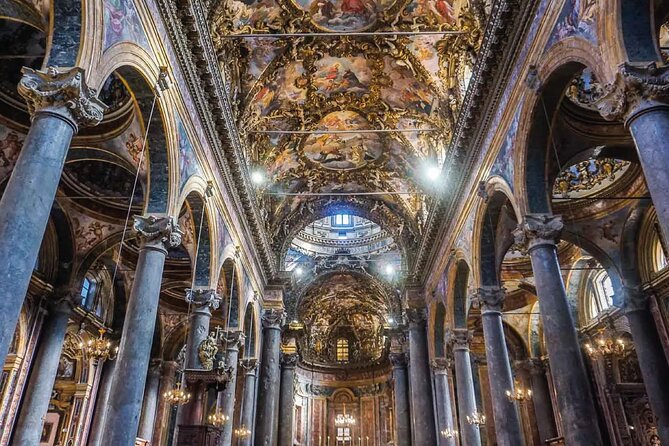
You begin at the Church of Saint John of the Hermits on Via dei Benedettini, 16. This stop is more than a quick photo moment—it’s where Palermo’s mixed religious layers become visible.
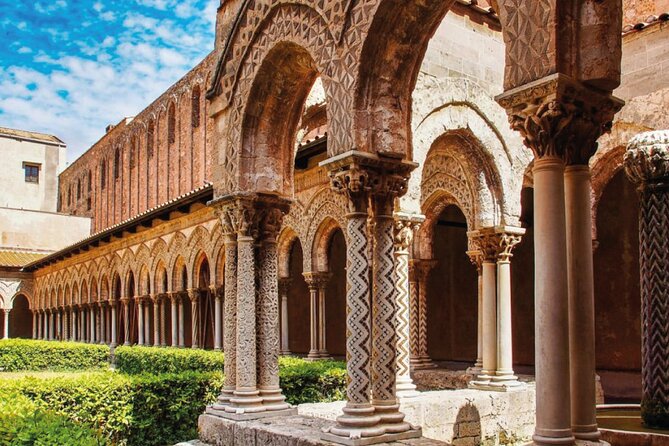
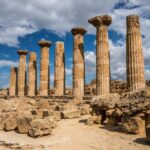
San Giovanni degli Eremiti is part of the UNESCO Arab-Norman Palermo itinerary. The complex sits on a site with deep religious tradition: first a monastery connected to Saint Hermes, then during Muslim domination, a mosque, and later it passed to the Benedictines. That mix is the point—standing there, you’re seeing a timeline stacked in one place.
A practical note: this stop lists a 25-minute visit and says the church ticket is not included (it’s listed as €7). If you want to avoid rushing, treat this as your warm-up—get the story, then move on before the day gets busy.
Norman Palace (Palazzo dei Normanni): oldest royal palace in Europe
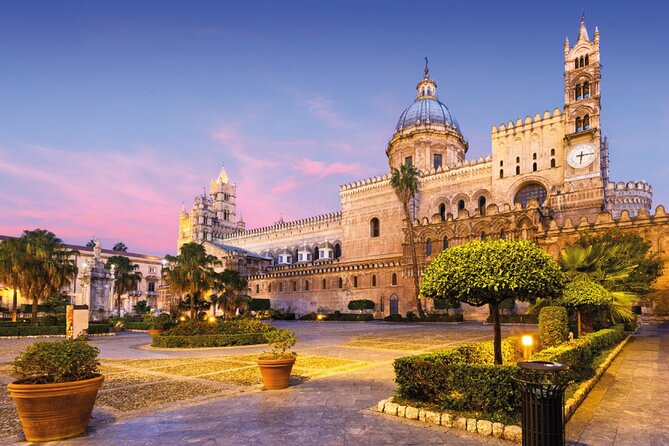
Next comes the Norman Palace, also called the Royal Palace. The guide points out that it’s the oldest royal palace in Europe, and it also reminds you there’s more going on beneath the surface.
The Norman Palace stands on older structures dating back to Punic-Roman times. Even the underground areas you can still visit can show remains tied to early Punic settlements—so the building isn’t just impressive because it’s grand. It’s impressive because it has multiple eras sitting under it.
This stop is listed as about 2 hours. The ticket is not included (listed as €17), so plan for that cost and give yourself enough time to actually look around instead of only skimming.
Cattedrale di Palermo: where styles overlap, and Santa Rosalia gets center stage
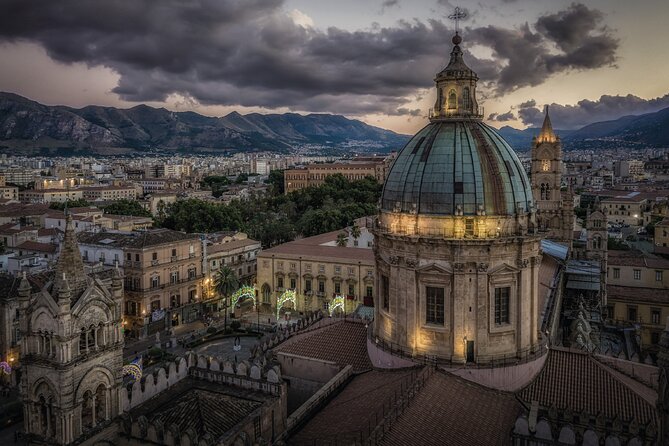
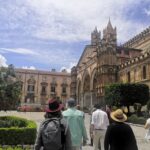
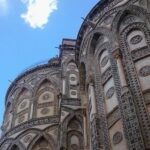
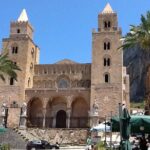
Palermo Cathedral is a highlight you don’t want to treat like a drive-by. The cathedral blends Byzantine, Islamic, and Latin elements, and it’s recognized as a UNESCO World Heritage Site.
This is also a living religious site. Besides regular worship, the cathedral area includes the Diocesan Museum and the Chapel with the relics of Santa Rosalia, Palermo’s patron saint. The tombs of the Norman kings are also part of what you can find here, which adds extra historical weight without needing a deep lecture.
Good news for your budget: this stop lists admission as free, and the guide suggests about 25 minutes. Use that time to slow down and look at the different styling cues—this is one of those places where the “why it looks different” clicks once you know what to look for.
More Palermo days out with a local guide.


Teatro Massimo: the big opera house and a clean urban edge
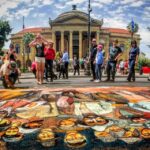
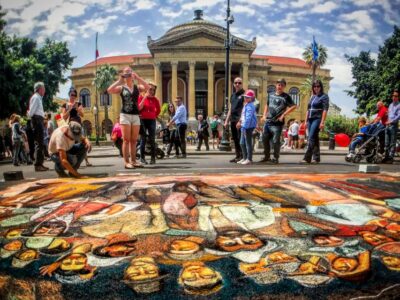
After the cathedral, the route heads to Teatro Massimo. This is described as Italy’s largest opera house and the third largest in Europe, and it sits in a strategic position between the old city and the northern expansion.
Expect neoclassical scale. The building is designed by Giovanni Battista Filippo Basile, and the contrast of that monumental façade against surrounding streets is part of the payoff of this walk.
The visit time listed is about 1 hour. The ticket is not included (listed as €12), so you’ll need to decide if you want to pay for an interior look. If your goal is the exterior and the feel of the area, you can still enjoy the stop without buying a ticket—but the guide frames it as worth proper time.
Quattro Canti and Piazza Pretoria: geometry in the center of town
Then you hit Quattro Canti, also known as Piazza dei Quattro Canti, created in 17th-century Palermo. The guide explains that the intersection of Via Maqueda (commissioned by the viceroy) and Via Vittorio Emanuele (also known as the Cassaro) shaped the city into four districts called “Mandamenti.”
This is the kind of place where you see why Palermo’s street plan feels logical once you understand it. The stop is quick—about 15 minutes—and the admission is free.
A little farther on is Piazza Pretoria, listed as another short stop (about 15 minutes) with free admission. It’s famous for the central fountain, which gives the square its nickname Piazza della Vergogna, or Square of Shame. The point isn’t the nickname—it’s that the square is a visually intense pause in the middle of walking routes.
La Vucciria market and Kalsa neighborhood: get your hands on the real Palermo
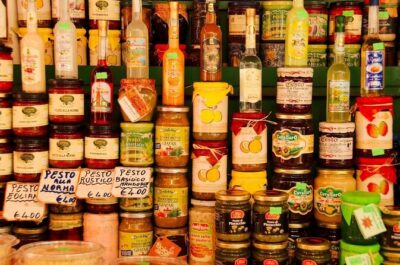
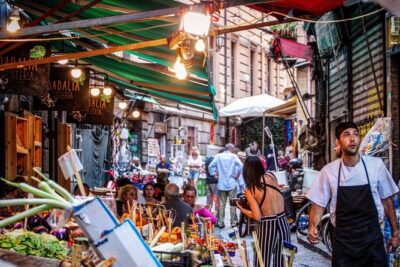
No Palermo day feels complete without at least one historic market. The route includes La Vucciria, described as one of Palermo’s most important historic markets, located in the Loggia district between Via Roma, Piazza San Domenico, and Via Vittorio Emanuele.
The guide notes that La Vucciria used to be one of the most liveliest and chaotic markets in the city center, and the name comes from a French word meaning butcher’s shop. Even if you’re not shopping, being in the middle of this energy is where Palermo’s personality shows up.
Plan about 25 minutes here, with admission free. You’ll probably want to slow down for sights and smells, and you may also want to decide if you’re buying snacks now or saving your appetite for later.
Then the walk transitions into Kalsa, one of the oldest neighborhoods in Palermo dating back to the Islamic domination era. The area keeps an “oriental atmosphere,” and the guide flags Arab-Norman style monuments as part of what you’ll notice.
This stop is shorter—about 15 minutes—and free. It’s a good breather between market intensity and the museum-style calm that comes near the end.
Palazzo Abatellis and the Museum of Majolica Genius: slow down at the end
Palazzo Abatellis is the next architectural stop, placed at Piazza Magione. The guide describes it as a Gothic and Renaissance example built in the 15th century for Francesco Abatellis, a Sicilian nobleman.
You’ll see Gothic elements mixed with Renaissance influences, designed by Matteo Carnilivari. The listed time is about 1 hour, and the ticket is not included. Since no price is provided here, treat this as a “check onsite or ahead” cost so you don’t get surprised.
After that, the route finishes at the Museo Delle Maioliche Stanze Al Genio, focused on majolica. If you like decorative tiles, this is exactly the kind of museum stop that makes a walking day feel complete instead of rushed.
The collection is in eight rooms and grouped by era and geographical origin. The guide points out tiles produced mainly in Campania and Sicily between the 15th and 19th centuries, used for floors in noble and bourgeois homes.
The time listed is about 1 hour, and the ticket is not included. Since the museum is also your end point, you can give yourself the full hour without worrying about being late for a departure.
Timing, pacing, and why the route order makes sense
The listed duration is about 6 to 7 hours. That’s a lot of walking, so the self-paced design is key. You’re not forced to keep moving at someone else’s speed.
The route also follows a smart flow. It starts with landmark religious architecture, moves into royal power, then shifts to public space and neighborhoods, and ends in a museum setting. That reduces the odds that you’ll feel museum-fatigued too early.
The audio structure helps with pacing because you can take a short look, press play again, then decide if you want to linger. The guide also supports listening through your smartphone speakers or headphones, which makes it easier if you’re in a busy market street.
Price reality check: when the free stops actually save you money
A big part of the value is that several stops are free. Palermo Cathedral is listed as free, and Quattro Canti and Piazza Pretoria are also free. La Vucciria and Kalsa are included with free admission too.
But three of the major monuments do require extra tickets:
- Chiesa degli Eremiti ticket: €7
- Palazzo dei Normanni ticket: €17
- Teatro Massimo ticket: €12
That’s €36 in ticket costs for the main paid entries the guide explicitly lists. Palazzo Abatellis and the majolica museum are also marked as not included, so you may see additional charges there too. In plain terms: you’re getting the route, navigation, and interpretation for a low fee, then paying for the specific sites you choose to enter.
How to make the digital guide work well on foot
You’ll need a smartphone with internet to use the digital guide, and the details to activate it are in your voucher. The guide is connected with Google Maps, which is great for navigation, but it also means you want your phone charged.
You’ll receive confirmation at booking, and the guide is available across the full day window listed (Monday through Sunday, 12:00 AM to 11:30 PM). Since this is self-paced, you can still choose a start time that matches your energy.
Also note the small practical constraints. This experience has a maximum of 104 travelers. That number matters more in busy periods if you’re coordinating with other people, but the core experience remains self-guided.
Who this Palermo walk is best for
This works best if you like structure with freedom. If you want to see the main landmarks—San Giovanni degli Eremiti, Norman Palace, Palermo Cathedral, Teatro Massimo, Quattro Canti, Piazza Pretoria, La Vucciria, Kalsa, Palazzo Abatellis, and the majolica museum—this route covers them in one long day.
It also suits couples and small groups who don’t want to follow a live guide’s tempo. With audio and text in several languages, it can be easier to stay together without everyone needing the same format.
If you absolutely hate smartphone navigation or you prefer a fully guided, live interpretation, you might feel the setup is more work than it’s worth. The digital format is the whole point here, so it’s best when you’re comfortable using your phone on the street.
Should you book it?
Book it if you want an affordable, well-ordered Palermo day with built-in history and navigation. The price plus the map-linked audio and text makes it an easy way to get context without paying for multiple separate guides.
Skip it if you plan to do only a couple of paid sights and you already know Palermo very well, because a self-guided route can feel redundant. Also consider the extra museum and monument tickets, since the guide fee doesn’t cover entry for several of the big stops.
If you’re trying to get your bearings fast and see a lot of Palermo’s key neighborhoods, this is a strong fit.
FAQ
How long is the Palermo walking tour with audio and written guide?
It’s listed at about 6 to 7 hours.
Is it offered in English?
Yes. English is listed among the available languages, along with other options.
Is this a guided tour with a person, or self-guided?
It’s a self-guided digital guide. You use your smartphone to follow the audio and written content while you walk.
What do I need to use the guide?
You need a smartphone with an internet connection. Activation details are provided in your voucher.
Are entrance tickets included?
Not for all stops. Tickets are not included for Chiesa degli Eremiti (€7), Palazzo dei Normanni (€17), and Teatro Massimo (€12). Palermo Cathedral, Quattro Canti, Piazza Pretoria, and the market and neighborhood stops are listed as free.
Where do I start the walk?
The start point is the Church of Saint John of the Hermits, Via dei Benedettini, 16, Palermo.
Where does the experience end?
It ends at the Rooms at the Museum of majolica Genius, Via Giuseppe Garibaldi, 11, Palermo.
Can I listen using headphones?
Yes. You can hear the audio through your smartphone speakers or through headphones if you have them.
Is mobile ticketing used?
Yes. The experience uses a mobile ticket.
Can I cancel for a refund?
Yes. Free cancellation is available, and you can cancel up to 24 hours in advance for a full refund.
More Guided Days in Palermo
More Tour Reviews in Palermo
More Palermo Old Town Walks
After something else? More tours and day trips around Palermo and western Sicily





Palermo Historic Center Walking Tours, compared.
 ★ 4.8NO Mafia Walking TourFrom $402,431 reviews
 ★ 5.0Palermo Original Street Food Walking Tour by StreatyFrom $832,105 reviews
 ★ 4.9Street Food and History Walking TourFrom $541,294 reviews
 ★ 5.0Palermo No Mafia walking tour: discover the Anti-mafia culture in SicilyFrom $391,011 reviews
 ★ 4.7Private Custom Walking Tour with Local GuideFrom $53661 reviews
 ★ 4.9Street Food Walking Tour with Local Guide & TastingFrom $52632 reviews
 ★ 5.0Palermo Walking Tour and Street FoodFrom $48617 reviews
 ★ 4.8UNESCO World Heritage Sites Guided Walking TourFrom $41548 reviews
Browse the lists this tour appears in