
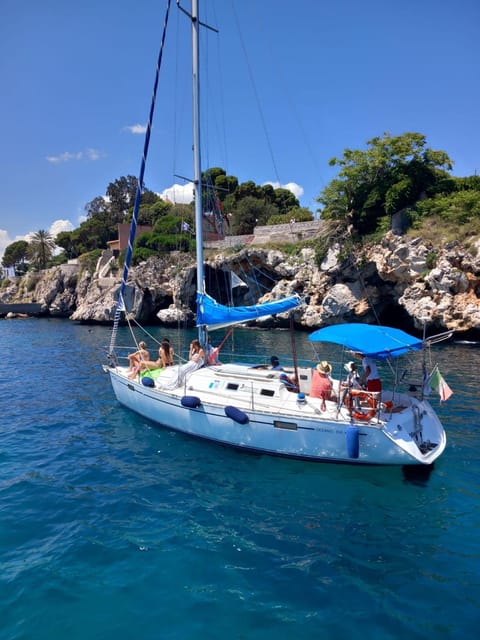
Reviewed · PALERMO SUNSET SAILING & APERITIF CRUISES
Palermo: the city from the sea
Palermo looks totally different from the water, and this 3-hour sea tour makes that obvious fast. You get a front-row view of key sights like Castello Utveggio and Porta Felice while the story of Panormus unfolds—an “all-port city” that different powers kept trying to control. I also like that it’s a small group (max 6), so the captain can actually explain what you’re seeing. The only real drawback to consider is the sea dip is weather dependent, so don’t bank on swimming every time.
Expect a mix of coast views and culture: you’ll learn how Monte Pellegrino and the Santa Rosalia shrine shaped Palermo, then connect that to the city’s bigger Mediterranean timeline—Romans, Greeks, Byzantines, Phoenicians, Arabs, Spanish, and Normans. You’ll finish with a traditional Palermo aperitif: cannolo tasting, almond pastries, and sipping wines including Zibibbo and Malvasia.
In This Review
- Key highlights to look for on the water
- Why Palermo feels like a port city when you’re actually at sea
- From Cala marina to a 3-hour sail with SEICA Boat
- Castello Utveggio and Porta Felice: the landmarks that make the coast make sense
- Monte Pellegrino and Santa Rosalia: the story behind Palermo’s mountain
- Queen’s Caves, Tonnare Florio, and Bordonaro: port history you can name
- Villa Igiea and the Palazzina dei Quattro Pizzi: a different mood along the shore
- The Palermo aperitif: cannolo tasting, almond pastries, and local wines
- The dip option: when to bring that towel
- Price and value for a $101.96, 3-hour Palermo sea experience
- Who should book this Palermo boat tour, and who might not
- Should you book Palermo: the City from the Sea?
- FAQ
- How long is the Palermo from the sea tour?
- Where does the tour depart from?
- What’s included in the price?
- What food and drinks are part of the aperitif?
- Is swimming included?
- What should I bring?
- What languages are offered?
- How big is the group?
- Is the tour wheelchair accessible?
Key highlights to look for on the water
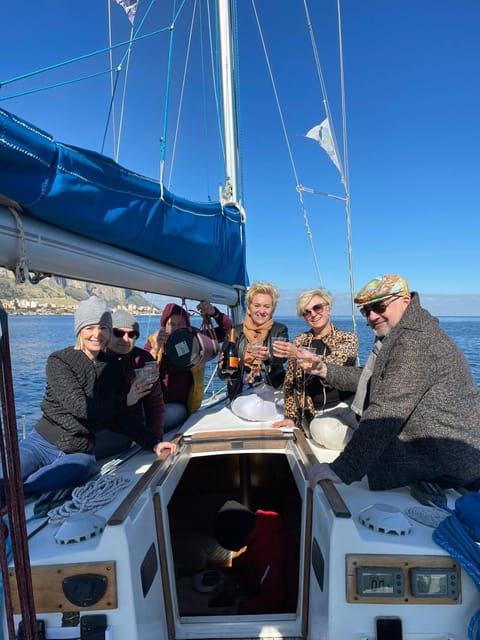
- Views from Seica Boat: You’ll see major landmarks from angles you simply don’t get on foot.
- Castello Utveggio and Porta Felice: Two standout points the guide ties to the city’s past.
- Monte Pellegrino + Santa Rosalia: You’ll hear why this mountain matters to Palermo’s identity.
- Aperitif you can taste: Cannolo, almond pastries, and local wines like Zibibbo and Malvasia.
- Dip option if conditions allow: Bring a towel and be ready to take a quick swim if the weather cooperates.
Why Palermo feels like a port city when you’re actually at sea
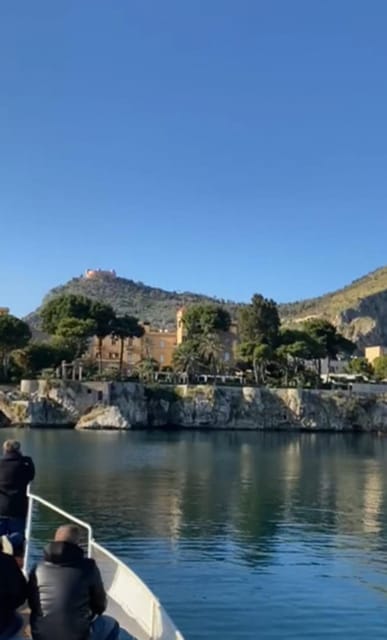
Palermo has always been pulled toward the sea. Long before the modern city layout, early settlers took root near Monte Pellegrino, and the mountain becomes part of the story of why Palermo grew where it did. From the boat, that translates into a simple takeaway: the sea isn’t a background here. It’s part of the way the city formed.
You’ll hear Palermo described as a Mediterranean capital people have wanted, fought over, and shaped for centuries. That’s not just a dramatic line—it helps you understand why you see so many architectural and cultural layers stacked on top of each other. One guide-style explanation can make the whole trip click: you’re not just sightseeing buildings, you’re watching the results of constant contact across the water.
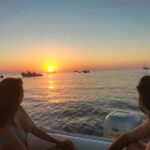
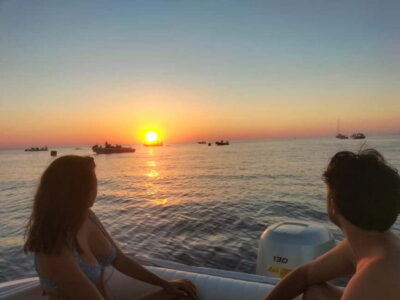
Back out on the water off Palermo with an aperitivo at sunset.

From Cala marina to a 3-hour sail with SEICA Boat
This runs daily from Cala marina, and the experience is built around a straightforward loop: you start on Seica boat, sail for about 3 hours, then return to the same place. That makes it easy to fit into a day because you’re not juggling complicated transfers or switching between multiple modes of transport.
One practical comfort note: the experience is a small group capped at 6 people, and that matters more than you’d think on a boat. Less crowding means more room to shift your position for photos, and it’s easier for the captain to keep the pacing comfortable.
Also, the hosts speak Italian and English, and the tour is listed as wheelchair accessible. If mobility is part of your planning, it’s reassuring to see that thought built in, not tacked on.
Castello Utveggio and Porta Felice: the landmarks that make the coast make sense
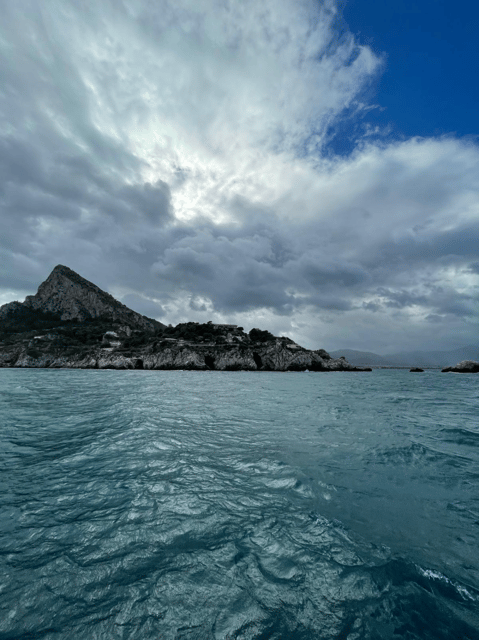
As you sail, you’ll get views of Castello Utveggio and Porta Felice. On land, these places can feel like stops you rush through. From the sea, they become visual anchors that help you understand the city’s shape—how defenses, entrances, and high points relate to the coastline.
The value here isn’t just the photo. It’s the perspective shift. When you’re looking from water level, you start to see how Palermo’s history points back to travel routes, maritime control, and movement along the shore. The guide’s commentary ties these landmarks into the larger timeline so they don’t become random names.
And yes, it helps that the reviews point to excellent captain comfort and great views—on a boat tour, that’s not a minor detail. If you’re comfortable, you actually pay attention.
Monte Pellegrino and Santa Rosalia: the story behind Palermo’s mountain
Monte Pellegrino is central to Palermo’s origin story, and the tour brings it into focus. You’ll learn that early settlers established themselves by putting down roots connected to this imposing mountain, and that the mountain is also famous for the shrine of Santa Rosalia, located inside a cave at the top.
Even if you can’t see everything up close from the sea, hearing the connection between the mountain and the patron saint helps you interpret what you’re looking at. It turns the shoreline into a map of meaning: a city isn’t only its streets, it’s also the myths and sacred places people organize their lives around.
This is one of the more “Palermo-specific” parts of the tour. Plenty of Mediterranean cities have layers from different empires. Palermo’s Santa Rosalia connection gives the story a sharper local identity.
Queen’s Caves, Tonnare Florio, and Bordonaro: port history you can name
A good sea tour does one thing well: it gives you names that you can later connect to real places. During this sail, you’ll pass the orbit of several specific spots, including the Queen’s Caves, the Tonnare Florio, and Bordonaro.
Why this matters for you: when you return on land, you’ll already have a mental map. You’ll know which names belong to what kind of coastline area and how the maritime identity keeps showing up again and again.
The tour ties these sites back into the bigger idea that Palermo is an all-port city—desired and shaped by different peoples across time. So even if you’re not stepping inside buildings during the cruise, you’re still gathering context you can use immediately.
More ways to get the measure of Palermo.

Villa Igiea and the Palazzina dei Quattro Pizzi: a different mood along the shore
Palermo isn’t only ancient and fortress-like. On the same sea route, the guide includes views linked to Villa Igiea and the Palazzina dei Quattro Pizzi.
I like this part because it prevents the tour from becoming a single-note “old ruins” experience. You start to sense that Palermo’s relationship with power and influence didn’t stop centuries ago—it adapted, expressed itself differently, and left another trail of landmarks for you to spot from the coast.
If you’re the type who likes your city storytelling to feel complete—coast + culture + the way wealth and influence left physical marks—this is a strong addition.
The Palermo aperitif: cannolo tasting, almond pastries, and local wines
After the main sightseeing, you’ll be offered a traditional Palermitan aperitif with local products. The standout items are cannolo tasting and almond pastries, plus sipping wines such as Zibibbo and Malvasia.
This is more than food padding at the end. In Sicily, aperitivo culture is part of how people slow down and share. On a boat tour, it also solves a real traveler problem: you’re out on the water for hours, then you don’t need to figure out where to eat dinner immediately.
And if you’re someone who thinks “I’ll just grab snacks later,” this is your reminder that a curated tasting can save time. You get a concentrated taste of local sweets and a couple of regional wine options without doing extra research mid-trip.
The dip option: when to bring that towel
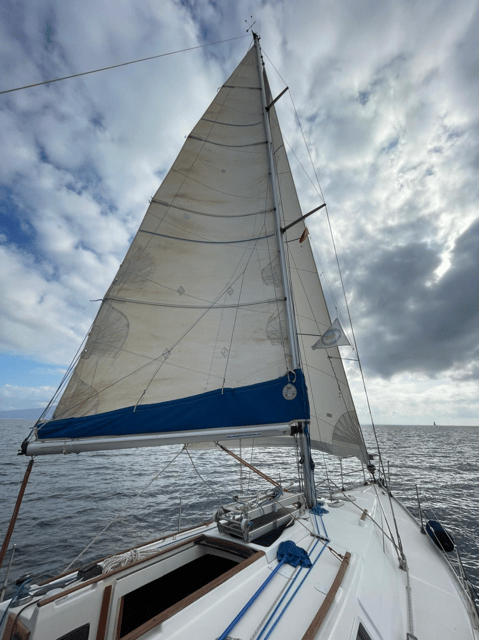
The tour notes a possibility of taking a dip, weather permitting. That means you shouldn’t plan your day like swimming is guaranteed. But it’s also a nice bonus if conditions are right.
Bring a towel—it’s specifically listed as what to pack. You’ll feel better about the option if you’re prepared, because you’re not stuck improvising something basic once you’re already on the boat.
Price and value for a $101.96, 3-hour Palermo sea experience
The price is listed at $101.96 per person, and the value comes from what’s included rather than the sticker alone.
Here’s what you’re getting as part of the package:
- a 3-hour city tour from the sea
- an aperitif with local products (cannolo tasting, almond pastries, and Zibibbo/Malvasia)
- the chance for a dip if conditions allow
That combination is the real math. You’re paying for a guided experience plus food and wine, not just transport. For many people, that’s where boat tours can feel fair: you’re not separately booking a cruise and then separately paying for a full aperitivo setup.
Also, the small group helps justify the feel of the tour. When the group is limited to 6, you’re more likely to get useful guidance rather than just being herded along.
Who should book this Palermo boat tour, and who might not
You’ll likely love this if:
- you want a different angle on Palermo’s landmarks
- you like city history when it’s tied to the geography of the sea
- you’re excited by a proper Palermo aperitif that includes cannoli and local wines
- you prefer a small-group experience
You might skip it if:
- you strongly need guaranteed swimming time, since the dip is weather dependent
- you want a full day on land with museum stops; this is built around the cruise and the views
Should you book Palermo: the City from the Sea?
If your Palermo plan includes “see the main sights” but you also want a fresh perspective, this is a smart pick. The tour is built around real, named landmarks—Castello Utveggio, Porta Felice, Queen’s Caves, Tonnare Florio, Bordonaro, Villa Igiea, and the Palazzina dei Quattro Pizzi—and it connects them to the big Mediterranean story of Palermo changing hands.
For me, the deciding factors are simple: comfort on the boat, great views, and the fact that the ending aperitif feels like part of the experience instead of an afterthought. If you like being on the water and you want your history lesson to have a sense of place, book it.
FAQ
How long is the Palermo from the sea tour?
The duration is 3 hours.
Where does the tour depart from?
It departs daily from Cala marina, and you start and return to Seica boat.
What’s included in the price?
The included items are the city tour from the sea and an aperitif with local products, with a possibility of taking a dip.
What food and drinks are part of the aperitif?
You’ll have cannolo tasting and almond pastries, plus local wines such as Zibibbo and Malvasia.
Is swimming included?
Swimming is possible, but only if weather conditions allow.
What should I bring?
You should bring a towel.
What languages are offered?
The host or greeter provides commentary in Italian and English.
How big is the group?
The group is limited to 6 participants.
Is the tour wheelchair accessible?
Yes, it’s listed as wheelchair accessible.
More Sightseeing Days in Palermo
More Tour Reviews in Palermo
More Palermo Sailing and Sunset Cruises
After something else? More tours and day trips around Palermo and western Sicily

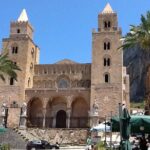
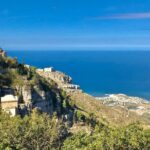
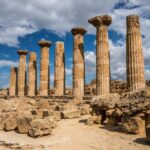

Palermo Sunset Sailing & Aperitif Cruises, compared.
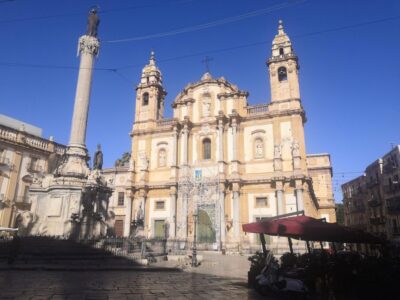 ★ 4.9Street Food Walking Tour at SunsetFrom $52492 reviews
 ★ 4.9Mondello,CapoGallo Reserve Boat Tour with Snacks and DrinksFrom $79439 reviews
 ★ 5.0Palermo Half Day Boat Tour with Palermo ExperiencesFrom $163224 reviews
 ★ 5.0Full-Day Snorkeling Boat Tour with Lunch and WineFrom $124196 reviews
 ★ 4.8Coastal Sightseeing Cruise with Snorkeling and AperitifFrom $51160 reviews
 ★ 5.0The Most Beautiful Sea Spots – Adventure Mode147 reviews
 ★ 4.7Vela Boheme ~ Vintage Sicilian Boat TourFrom $113103 reviews
 ★ 4.9Boat Tour to Mondello – Isola delle Femmine + drinkFrom $73102 reviews
Browse the lists this tour appears in