
Reviewed · PALERMO HISTORIC CENTER WALKING TOURS
Palatine Chapel: Private Walking Tour & Sicilian Lunch
Palermo’s world-mix comes alive on foot. This private 4-hour walk threads Arabic neighborhoods, famous churches, and Theater Massimo, then wraps it up at the Palatine Chapel and a traditional Sicilian lunch. One thing to plan for: Palatine Chapel entry (and audio guide) and Theater Massimo entry are not included in the price.
I like how the route is built for real bearings first, then big-ticket sights second. You start at Piazza Verdi, hit major streets and corners like Ruggero VII and Quattro Canti, and finish with an eating plan that feels local, not touristy.
In This Review
- Key highlights at a glance
- Why Palermo works so well for a walking tour
- Piazza Verdi, Politeama Square, and Theater Massimo
- Via Maqueda, Candelai, and Quattro Canti’s city geometry
- Cathedral area stops: St. Joseph of Theatine, the Martorana, and the Square of Shame
- Royal Palace and Palatine Chapel: the Arab-Norman highlight
- Vucciria market time and Saint Dominic Square before lunch
- Sicilian lunch in a 16th-century Spanish building
- Price and value: what $192.58 per person buys you
- Tour flow, pacing, and who this suits best
- Practical tips before you go
- Should you book Palatine Chapel, Theater Massimo, and the Sicilian lunch?
- FAQ
- What is the duration of the tour?
- Where does the tour start and end?
- Is the Palatine Chapel ticket included?
- Is entry to Theater Massimo included?
- What’s included in the price?
- What does the lunch include?
- Is this tour private?
- Is it suitable for wheelchair users?
- Can I cancel for a refund?
Key highlights at a glance
- Palatine Chapel inside the Royal Palace: Arab and Norman art in one unforgettable stop
- Theater Massimo tour: the largest theater in Europe, plus an easy intro to its area
- Arabic Palermo details: red domes on the Martorana and the Square of Shame visuals
- Historic market time: shop in the Vucciria area and around Saint Dominic Square
- Sicilian lunch in a 16th-century Spanish building: buffet favorites, wine, and dessert
Why Palermo works so well for a walking tour
Palermo is built for wandering. The streets and lanes are narrow, the city feels layered, and the old neighborhoods don’t really behave like a grid. That’s exactly why a walking route makes sense here. You get the city’s logic fast—how districts slide into each other—and you can spot the Arabic influence in details like domes, street textures, and the way certain areas cluster.
This tour also stays focused on highlights without turning into a museum sprint. You’re walking the kind of loop that helps you understand Palermo’s structure: a main avenue backbone, major landmarks that act like anchors, then smaller corners where the city’s character shows up.
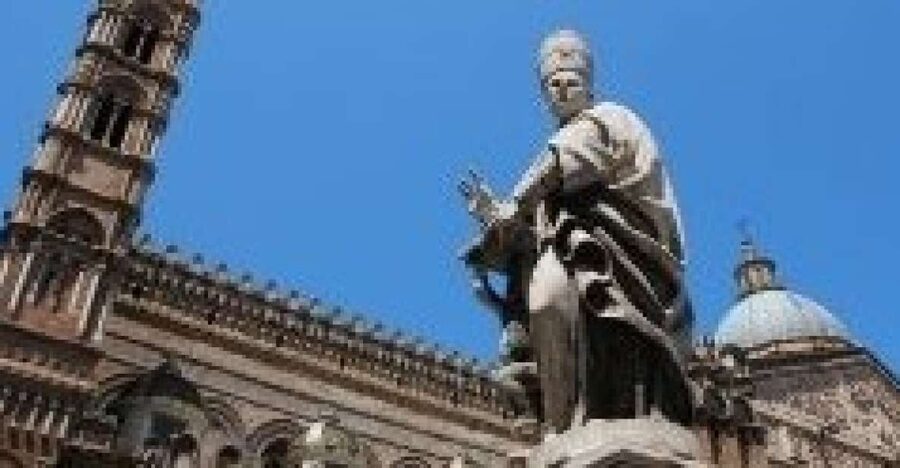
More of the old centre on foot, from the Quattro Canti to the markets.
Piazza Verdi, Politeama Square, and Theater Massimo
You meet at Piazza Verdi, right at the stairs of the Theatre. From there, you cross Politeama Square, where Palermo’s main avenues meet. It’s a good first move because you quickly get oriented before you start threading smaller streets.
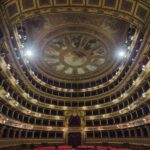
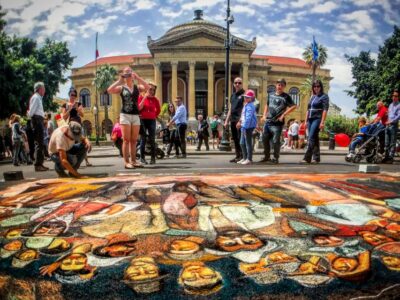
Next comes Ruggero VII Street, often called the lounge of Palermo. It’s the kind of street where you’ll feel how daily life moves—shops, facades, and that Palermo rhythm that’s different from the coast towns. You pass the Church of St. Lucia before reaching Theater Massimo, the largest theater in Europe.
Two practical notes here:
- Theater Massimo entry isn’t included, so you’ll want to be ready for that reality if you’re hoping for full access.
- The tour style is “see and understand,” not “sit and read.” You’ll walk through the area and get the context that makes the building more than just a photo stop.
If you’re the type who likes grand architecture but also wants explanations that connect the dots, this portion is a solid start.
Via Maqueda, Candelai, and Quattro Canti’s city geometry
After the theater, you head along Via Maqueda, an ancient commercial street lined with historic buildings and churches. This is a great section for learning Palermo by street name. It’s also where you’ll feel the city’s age in the urban fabric—layer upon layer, not one clean timeline.
Then you reach Candelai, which sits at the heart of Palermo’s nightlife. Even if you’re not planning a late evening, this stop helps you see where locals go after dark, and why certain streets in Palermo feel more alive than others.
A major waypoint comes next: Quattro Canti, meaning four corners. This landmark divides the city exactly into four parts. It’s the kind of place where you stop, look around, and suddenly the city makes more sense. It also works well for photos because the geometry forces a clean perspective.
Cathedral area stops: St. Joseph of Theatine, the Martorana, and the Square of Shame
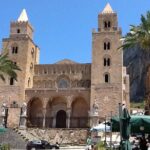
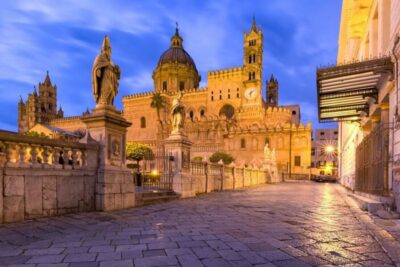
From Quattro Canti, the tour keeps you in the Cathedral quarter’s orbit. You’ll see the church St. Joseph of Theatine and tour the iconic Cathedral of Palermo area. Even if you’re not a church-history superfan, these stops help you understand how religion, power, and neighborhood identity were stitched together in Palermo.
You’ll also pick up several Arabic-influenced visuals as you go, including:
- The community of St. Clare tucked into the inner lanes
- Red Arabic-style domes on the Church of the Martorana
- The Square of Shame, known for nude statues
That last one is the kind of detail that catches your eye because it’s so specific. The point isn’t shock value; it’s that Palermo doesn’t hide its contradictions. If you like cities that show their personality openly, you’ll appreciate this stop.
One more consideration: religious sites require clothing that covers your body. Bring something light you can add or adjust when you get to churches.
Royal Palace and Palatine Chapel: the Arab-Norman highlight
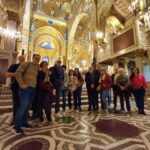
Your big ticket moment arrives at the Royal Palace, where you visit the Palatine Chapel—described here as the jewel of Arab and Norman art and also the most visited monument in Sicily. The Palace setting matters. Inside, the Chapel isn’t just a standalone church stop; it feels like a statement made by rulers who understood the power of style and symbols.
This is where the tour earns its name. You’re seeing the blend of influences that make Palermo famous in the first place, and the Chapel is the clearest place to experience it without having to chase separate sites across town.
Important practical detail: Palatine Chapel entry ticket and audio guide are not included. The good news is that the tour includes skip-the-ticket-line support, so you’re less likely to waste your walk window stuck in a long queue. Just plan for the additional cost of entry when you arrive.
The Norman palaces, the cathedral and the hushed Capuchin catacombs.

Vucciria market time and Saint Dominic Square before lunch
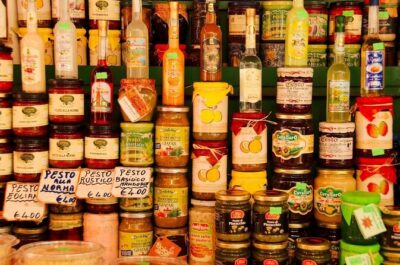
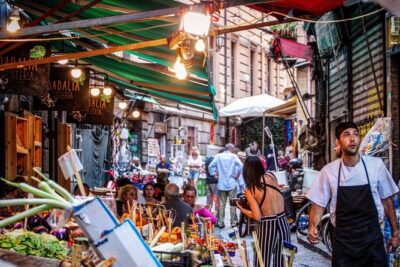
Before you eat, you get a chance to slow down and browse. You shop in the historic Vucciria market and around Saint Dominic Square. This is not just a token photo stop. It’s built into the route so you can handle the sensory side of Palermo—smells, displays, and the energy of local commerce.
Vucciria is also a good place to buy small gifts or nibble at your own pace, if you want to. If markets make you hungry fast (they will), you’ll appreciate that lunch is lined up soon after.
Sicilian lunch in a 16th-century Spanish building
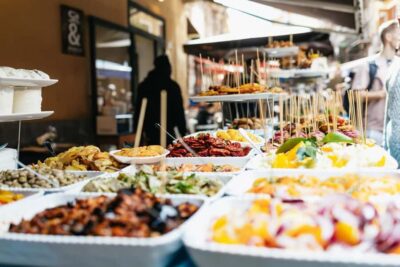
Then it’s lunch time, served inside a 16th-century Spanish building—a setting that makes the food feel like part of the story, not just a break. The lunch is a traditional Sicilian buffet, and you get a clear list of what to expect:
You’ll likely see dishes such as:
- panelle
- sfincione
- anelletti al forno
- caponata
- cassatelle
You also get Sicilian wine with the meal. Dessert comes as almond biscuits and mocha espresso. It’s a strong lineup, and it’s exactly the kind of meal that gives you the flavors of Palermo in one sitting.
Practical tip: after a walking tour that includes churches and landmarks, you’ll be glad the lunch is buffet-style. You can pace yourself, sample, and avoid the stress of ordering correctly in the middle of fatigue.
Price and value: what $192.58 per person buys you
At $192.58 per person for a 4-hour private tour, you’re paying for three main things:
- A live guide guiding you through a tight Palermo loop
- A traditional Sicilian lunch with wine and dessert
- A smoother sight experience thanks to skip-the-ticket-line support
What’s not included matters, because it changes your real total:
- Palatine Chapel entry ticket and audio guide
- Entry to Theater Massimo
So the value is best when you treat this as a structured half-day plan, not a standalone ticket-bundling deal. You’re essentially paying for time saved (less queue time), context delivered by a real person, and a guided path that prevents you from guessing your way between neighborhoods.
Also, this is a private group. That usually means a better pace for questions and less waiting around, especially in narrow streets where “everyone figures it out” can turn into frustration.
Tour flow, pacing, and who this suits best
This is a half-day that starts at Piazza Verdi and ends back at the meeting point. That return-to-start pattern is useful: you don’t have to re-navigate across Palermo near the end when you’re tired.
You’re walking through a mix of big and small stops:
- Main square orientation (Politeama Square)
- Avenue walking (Ruggero VII, Via Maqueda)
- Landmark pauses (Theater Massimo, Quattro Canti)
- Inner-lane details (Arabic neighborhoods, St. Clare area)
- Palace-level art focus (Palatine Chapel)
- Market browsing and lunch (Vucciria and Saint Dominic Square)
Who should book it?
- You want a guided framework for Palermo, not just a list of monuments
- You care about the Arab-Norman story and want it anchored in one key site
- You like market-and-food culture paired with major sights
- You prefer a private pace over joining a large group
Who might want to think twice?
- If you hate churches and religious sites, you’ll spend some time in that mix.
- If you’re counting every euro and don’t want extra entry fees, remember the Palatine Chapel and Theater Massimo entries are not included.
Practical tips before you go
A few things will make your half-day easier:
- Wear shoes you trust. Palermo streets are narrow and uneven in spots, and you’ll cover a lot of ground in 4 hours.
- Bring a light layer you can use for religious sites. Clothing that covers your body is expected.
- Keep your schedule flexible for sacred sites. The operator notes they’re not responsible for extraordinary closures of Massimo Theater and the churches.
- Expect a multilingual guide. Options include Italian, English, French, Spanish, Russian, and German.
If you like a tour that balances architecture, city planning, and real food, this one fits.
Should you book Palatine Chapel, Theater Massimo, and the Sicilian lunch?
Yes—if you want your Palermo day to feel organized and meaningful. The Palatine Chapel stop is the centerpiece, and the rest of the route supports it by teaching you what to look for: Arabic-influenced visuals, city geometry at Quattro Canti, and the Cathedral quarter’s role in the city’s identity.
I’d book it especially if you value a guide who can connect what you see to why it matters, then reward that with a proper Sicilian lunch in a historic setting. Just factor in the extra entry tickets for Palatine Chapel and Theater Massimo so there are no surprises.
FAQ
What is the duration of the tour?
It runs for 4 hours.
Where does the tour start and end?
It starts at Piazza Verdi at the stairs of the Theatre, and it ends back at the same meeting point.
Is the Palatine Chapel ticket included?
No. The Palatine Chapel entry ticket and audio guide are not included.
Is entry to Theater Massimo included?
No. Entry to Theater Massimo is not included.
What’s included in the price?
You get a guided walking tour and a traditional Sicilian lunch.
What does the lunch include?
The lunch is a traditional Sicilian buffet with Sicilian wine and dessert (almond biscuits and mocha espresso).
Is this tour private?
Yes, it’s a private group.
Is it suitable for wheelchair users?
No, it is not suitable for wheelchair users.
Can I cancel for a refund?
Yes. You can cancel up to 24 hours in advance for a full refund.
More Tour Reviews in Palermo
More Palermo Cathedral and Palace Tours
More Palermo Old Town Walks
After something else? More tours and day trips around Palermo and western Sicily




Palermo Historic Center Walking Tours, compared.
 ★ 4.8NO Mafia Walking TourFrom $402,431 reviews
 ★ 5.0Palermo Original Street Food Walking Tour by StreatyFrom $832,105 reviews
 ★ 4.9Street Food and History Walking TourFrom $541,294 reviews
 ★ 5.0Palermo No Mafia walking tour: discover the Anti-mafia culture in SicilyFrom $391,011 reviews
 ★ 4.7Private Custom Walking Tour with Local GuideFrom $53661 reviews
 ★ 4.9Street Food Walking Tour with Local Guide & TastingFrom $52632 reviews
 ★ 5.0Palermo Walking Tour and Street FoodFrom $48617 reviews
 ★ 4.8UNESCO World Heritage Sites Guided Walking TourFrom $41548 reviews
Browse the lists this tour appears in