
Reviewed · PALERMO HISTORIC CENTER WALKING TOURS
Discover Palermo
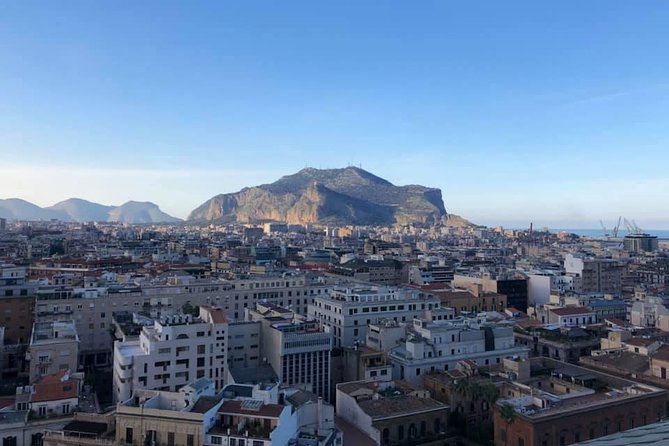
Palermo hits you in layers. This English-led walking tour strings together the Baroque showpieces, Norman-era surprises, and the Capo market in a tight 2–3 hour loop. You’ll move at a walking pace, get context as you go, and end up with a clear sense of how Palermo’s power, faith, and street life connect.
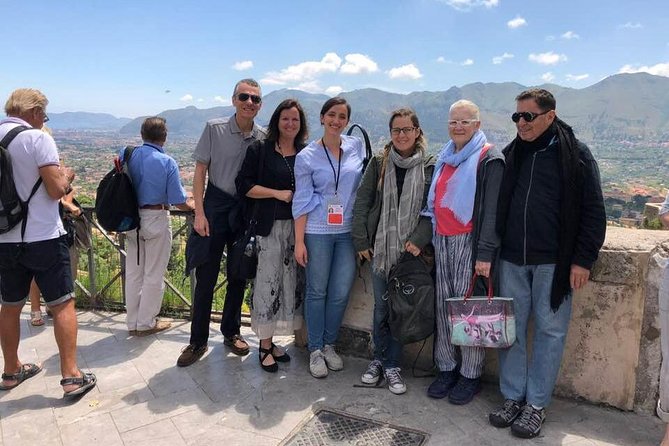
I love the small group setup (max 10), because it feels conversational, not like a cattle line. And I’ve heard guides such as Barbara and Manuela bring the city to life with humor and real story-telling, even when you bring teens.
One thing to plan for: a few stops have paid entrance (churches and sometimes Teatro Massimo), and key sites like La Martorana may only be visitable when open.
In This Review
- Key things to know before you go
- Why This Palermo Walking Tour Works in Just 2 to 3 Hours
- Piazza Pretoria: The White Marble Fountain and a Whole Lot of Drama
- Quattro Canti and Santa Caterina: Baroque Geometry Up Close
- La Martorana When Open and the Meschita (Jewish) Quarter
- Chiesa Del Gesù Marble and Palermo’s Oldest Street Vibes
- Cattedrale di Palermo: Norman Tombs and Santa Rosalia’s Silver Chapel
- Capo Street Market: Food, Noise, and the City’s Real Pulse
- Teatro Massimo Finish: Sicily’s Big Opera House in Neoclassical Style
- Price and Value: What $54.42 Gets You (and What It Doesn’t)
- The Guide Makes the Difference: Humor, Teen-Proof Storytelling, and Market Help
- Practical Tips Before You Set Out in Palermo
- Should You Book This Palermo Highlights Tour?
- FAQ
- How long is the Discover Palermo walking tour?
- How much does it cost?
- Is the tour offered in English?
- Do I need to pay extra for church and theatre entrances?
- What if La Martorana is closed when I visit?
- Where does the tour start and end?
- How many people are in the group?
- Can I cancel for a full refund?
Key things to know before you go
- Up to 10 people means more questions and a more personal pace.
- Baroque highlights, quickly: Piazza Pretoria and Quattro Canti hit hard in a short time.
- Church access can vary: some entries are not included, and La Martorana depends on site availability.
- Jewish history is part of the walk, including the Meschita area and what happened in 1493.
- Capo Street Market is the food-fuel stop, with fruit, fish, spices, and famous local bites.
- You finish near Teatro Massimo, so you’re well-placed to keep exploring afterward.
Why This Palermo Walking Tour Works in Just 2 to 3 Hours
Palermo is big on layers: Arabic, Norman, Spanish, and Italian threads all show up if you know what to look for. This tour helps you get your bearings fast without trying to do the whole city in one day. The format is straightforward: you walk a historic loop, stop for key sights, and get explanations that tie the buildings to the people who built them.
The 2 to 3 hour timing is ideal on a first or second day, when you want energy for the rest of your itinerary. With a group size of 10 or fewer, you’re not stuck listening over everyone’s shoulder. Also, it’s offered in English, which matters for a city where the best details are often carved into stone.
You should also know the tour is weather-dependent (it’s a walking experience), and some interiors are not guaranteed unless you have access when the day’s hours line up. Still, even with partial closures, the outdoor highlights and the market stop do most of the heavy lifting.
More of the old centre on foot, from the Quattro Canti to the markets.
Piazza Pretoria: The White Marble Fountain and a Whole Lot of Drama
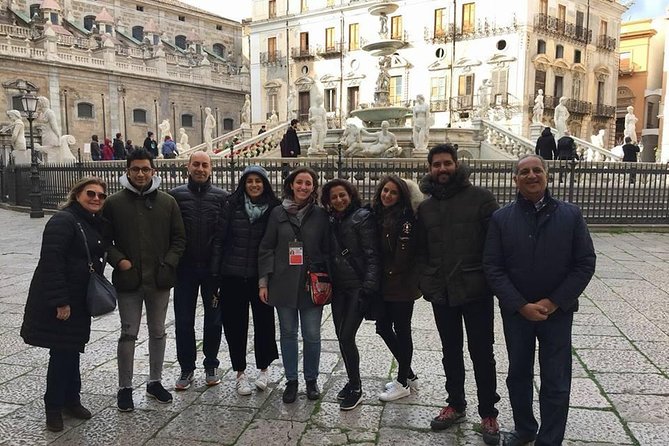
You start at Piazza Pretoria, a classic “wow” opening. The star is the fountain called the Fountain of Shame, carved in striking white Carrara marble. It’s theatrical in the best way—lots of movement and detail, the kind of thing you’ll want photos of from multiple angles because the sculpture lines shift with your viewpoint.
Around the square, you’ll also see major civic and religious buildings, including Palazzo delle Aquile and the Town Hall, plus the baroque church of Santa Caterina d’Alessandria. The square matters because it shows Palermo’s baroque sense of spectacle. This isn’t only about beauty; it’s about power and display.
One practical upside: this stop is free for admission, so you’re not burning time (or money) early. You’re basically getting a free crash course in what Palermo does best—architecture that looks like it has a personality.
Quattro Canti and Santa Caterina: Baroque Geometry Up Close
From Piazza Pretoria you head toward Quattro Canti, the center of the historic core. This is one of those places that makes you understand baroque planning. The square sits at an intersection, and the design turns street corners into a stage—so even if you’re just walking through, you feel like you’re standing inside a carefully made set.
Then comes Santa Caterina d’Alessandria, where the focus shifts from squares to quieter (but still impressive) spaces. You’ll visit the cloister area, and you can also see the monastic confectionery connected with the monastery. The cloister is valuable because it gives you a contrast to the loud outdoor squares—stone, silence, and a slower pace.
If the baroque church portion is accessible that day, there may be an additional ticket fee since that entrance is not included. That’s worth keeping in mind. I like planning this kind of tour with a “flex” mindset: you’re there for the big landmarks, but interiors can be selective.
La Martorana When Open and the Meschita (Jewish) Quarter
Next is Santa Maria dell’Ammiraglio, better known as La Martorana. This is one of Palermo’s visual oddities—in a good way—because it blends Norman and baroque art styles. The big caveat: it’s only visitable when the site is open. If it’s not available, the tour adjusts and may route you through an alternative such as the Church of Jesus.
That “it depends on access” detail is not a flaw—it’s real travel life in a historic city. But it does affect your day. If La Martorana is important to you, keep your expectations flexible and remember the guide will adapt.
After that, you move into Giudecca / Il Quartiere Ebraico, part of the Meschita neighborhood. You’ll learn about the Jewish community that lived there until their expulsion in 1493. This stop matters because it anchors Palermo’s story beyond kings and churches. You start seeing the city as a place where communities formed, thrived, and were violently reshaped by history.
Chiesa Del Gesù Marble and Palermo’s Oldest Street Vibes
Palermo’s baroque can be almost overwhelming, and Chiesa del Gesù is the kind of church that makes you pause mid-step. The reason is the marble decoration—rich, detailed, and made for close viewing. As with other interiors, entrance is paid by customers, so you may see it from the outside only if you choose not to add the ticket.
Then you’ll walk along the city’s most ancient and important street—lined with noble palaces and shops where you’ll find Sicilian craftsmanship. This part of the route is a nice reminder that Palermo isn’t only monuments. It’s also trade, workshops, and everyday commerce. Even if you don’t buy anything, the street gives you a sense of what the historic center has been doing for centuries.
If you like architecture but also like real city textures—doorways, signage, storefront displays—this stretch is the bridge between “tourist landmark” and “living street.”
Cattedrale di Palermo: Norman Tombs and Santa Rosalia’s Silver Chapel
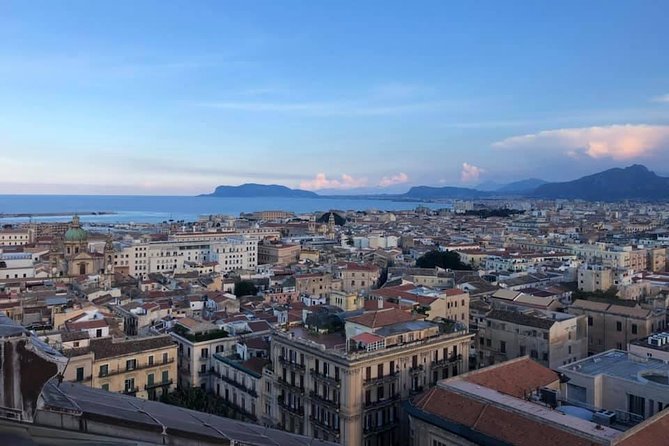
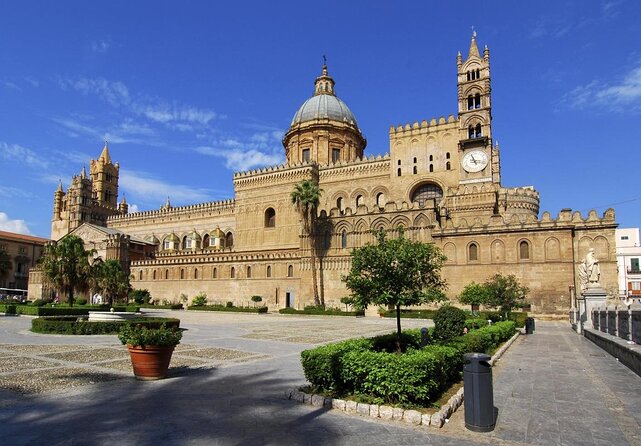
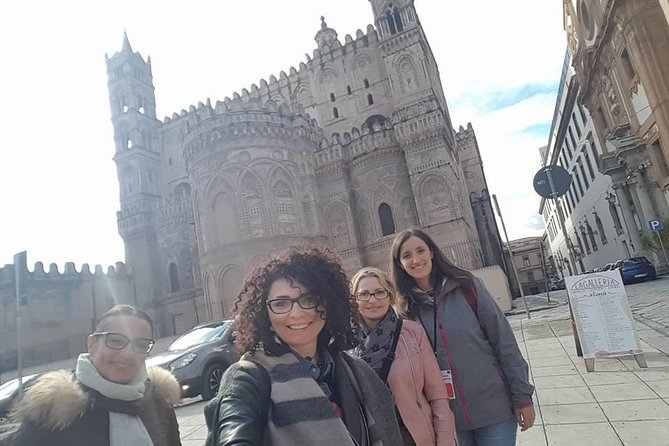
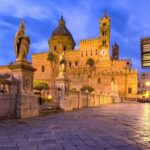
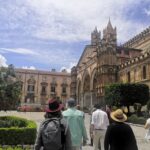
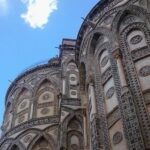
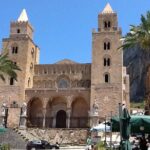
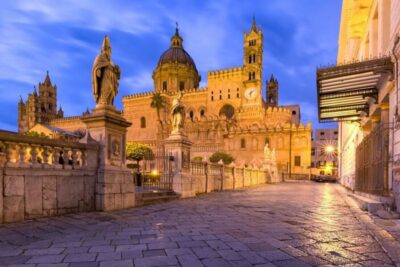
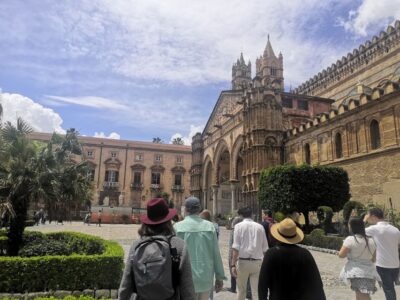
One of the biggest stops is Cattedrale di Palermo. This cathedral is a mix of cultures and styles, and it’s considered the most important church in the city for the tombs of the Norman kings. There’s also the Silver Chapel of Santa Rosalia, which is one of those details that makes people schedule time specifically for Palermo’s cathedral.
What I like about seeing this here, rather than as a standalone plan, is that the tour has already trained your eye. Earlier you learned what baroque looks like when it wants to be noticed. Now you see Norman-era significance and the long-lasting religious devotion tied to the city’s identity.
This stop includes free admission, which is a practical bonus. You can spend more time inside without paying extra just to access the main cathedral space.
Capo Street Market: Food, Noise, and the City’s Real Pulse
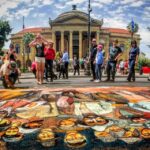
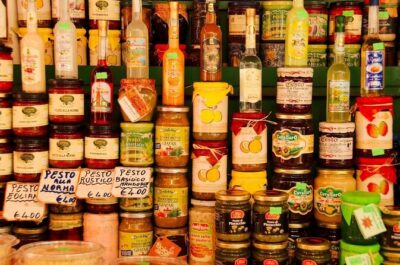
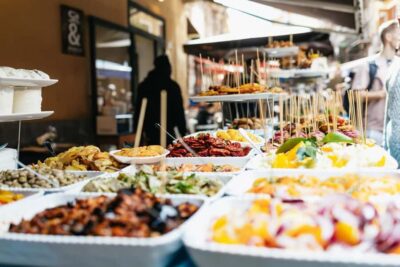
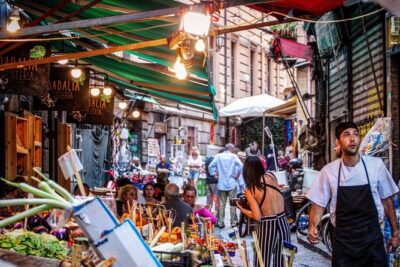
Then you hit Capo Street Market, and it’s one of the best ways to “ground” the day. The market is packed with fruit, vegetables, fish, and spices—exactly the mix that makes Palermo taste like Palermo. It’s also a visual lesson in how food markets work in Italy: you’re seeing ingredients, not packaged ideas.
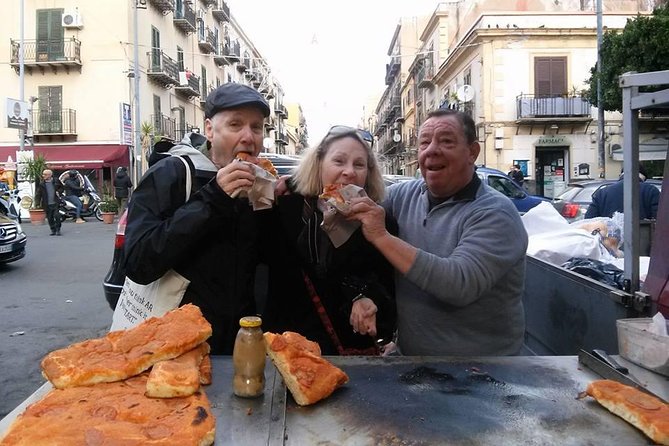
This is where I’d expect most people to perk up, because the walk stops being only about buildings and starts being about daily life. In particular, guides like Lara and Barbara have a knack for steering people toward what to try—think local street food such as arancini and sweet treats like cannoli.
Even if you don’t do a tasting spree, you’ll still get something valuable: a sense of where locals shop, how vendors present their products, and how the market shapes the rhythm of the neighborhood.
As a practical tip, bring small bills or a card if you plan to snack. And expect sensory intensity—this is not a museum room. It’s a working market.
Teatro Massimo Finish: Sicily’s Big Opera House in Neoclassical Style
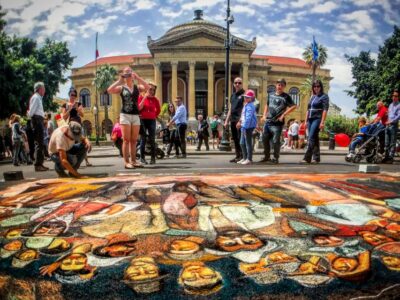
You wrap up near Teatro Massimo, a neoclassical opera theater often described as the largest opera house in Italy and the third largest in Europe. The tour’s final stretch gives you a dramatic punctuation mark: after churches and markets, you end with a giant cultural statement.
Entrance to the theater itself may involve a fee since it’s not included, so you might focus on the exterior and the scale if you skip the interior ticket. Still, finishing here is smart. You’re placed near a major landmark, and it’s easy to continue exploring nearby streets without having to re-orient from scratch.
Because the tour ends around Piazza Giuseppe Verdi, you’ll also find it simpler to catch public transport from a central area.
Price and Value: What $54.42 Gets You (and What It Doesn’t)
At $54.42 per person for a 2 to 3 hour walking experience, this tour sits in the “good value” range for a historic-center highlights day—especially because so many stops are free. Squares, street views, the cathedral exterior/space where indicated, and the market are all part of the included experience.
The main reason the price stays reasonable is that several interiors are not included. Churches such as the baroque church component at Santa Caterina, La Martorana, Chiesa del Gesù, and the theater stop are the types of places where you may pay an entrance fee separately if you want to go inside. If you’re the type who always pays for interiors, you’ll want to budget for that add-on.
So the value question becomes simple:
- If you’re happy focusing on exteriors plus a few paid interiors, the price feels like a bargain.
- If you want to go into every optional interior, your total cost rises, but you’re still getting a tight guided route that saves you time and guesswork.
The Guide Makes the Difference: Humor, Teen-Proof Storytelling, and Market Help
A big theme from the guides leading this tour is engagement. People mention guides such as Barbara, Manuela, Lara, and Stefani keeping energy up and turning stone-and-history into something you can actually follow. If you bring kids or teens, this tour style can work well because the storytelling isn’t only facts—it’s also pacing and humor.
Market guidance also seems to be a highlight. Instead of wandering around the stalls randomly, you get direction for what to try (like arancini) and where the sweets (like cannoli) tend to shine. That’s not about “shopping”—it’s about saving time and avoiding the trap of buying the wrong thing out of hunger.
One consideration: if weather turns ugly (rain was mentioned in a less-than-perfect experience), you may feel rushed or lose some comfort. Hearing can also be a small issue if you don’t have an audio system. Nothing drastic, but it’s good to know what could affect your experience.
Practical Tips Before You Set Out in Palermo
Palermo is best on foot, but your day still depends on basics. Wear shoes you can walk in for a couple of hours. You’ll be moving between historic blocks, and surfaces can be uneven.
For churches: some entrances are not included, so if interiors matter to you, plan to pay on-site if possible. Also, think about priorities. If rain hits, it’s easy to spend your energy debating which paid spaces to enter. Pick one or two must-sees and leave the rest to chance.
For La Martorana: since it depends on availability, don’t build your whole day around one interior ticket. The route may adjust, and that flexibility is part of how the tour functions.
Finally, bring a phone battery and some patience. Palermo’s best moments often happen when you slow down for a corner view or a quick question for your guide.
Should You Book This Palermo Highlights Tour?
If you want a first-pass overview that covers the cathedral, the baroque squares, a Norman connection, a Jewish-history stop, and a real market within one guided walk, this tour is a strong choice. The small group size and the chance to ask questions make it feel efficient without being rushed.
If you only care about a single specific attraction and you’re comfortable navigating on your own, you might not need a guide. But if your goal is to understand what you’re looking at—and still eat your way through the center—this is one of the easier ways to get there.
FAQ
How long is the Discover Palermo walking tour?
It runs about 2 to 3 hours.
How much does it cost?
The price is $54.42 per person.
Is the tour offered in English?
Yes. It’s offered in English.
Do I need to pay extra for church and theatre entrances?
Some sites have admission not included, so you may need to pay on-site if you want to enter certain churches or Teatro Massimo.
What if La Martorana is closed when I visit?
The church is visitable only when the site is available for visits. If it’s not open, the tour provides an alternative route (it may include the Church of Jesus) and the visit may be adjusted.
Where does the tour start and end?
It starts at Piazza Pretoria and ends at Piazza Giuseppe Verdi.
How many people are in the group?
The tour has a maximum of 10 travelers.
Can I cancel for a full refund?
Yes. You can cancel up to 24 hours in advance for a full refund. If it’s canceled due to poor weather, you’ll be offered a different date or a full refund.
More Tour Reviews in Palermo
More Palermo Old Town Walks
After something else? More tours and day trips around Palermo and western Sicily




Palermo Historic Center Walking Tours, compared.
 ★ 4.8NO Mafia Walking TourFrom $402,431 reviews
 ★ 5.0Palermo Original Street Food Walking Tour by StreatyFrom $832,105 reviews
 ★ 4.9Street Food and History Walking TourFrom $541,294 reviews
 ★ 5.0Palermo No Mafia walking tour: discover the Anti-mafia culture in SicilyFrom $391,011 reviews
 ★ 4.7Private Custom Walking Tour with Local GuideFrom $53661 reviews
 ★ 4.9Street Food Walking Tour with Local Guide & TastingFrom $52632 reviews
 ★ 5.0Palermo Walking Tour and Street FoodFrom $48617 reviews
 ★ 4.8UNESCO World Heritage Sites Guided Walking TourFrom $41548 reviews
Browse the lists this tour appears in