
Reviewed · PALERMO CATHEDRAL, CATACOMBS & NORMAN PALACES
Capuchin Catacombs and Monreale Cathedral Private Tour
Walking into the Capuchin Catacombs feels unreal. This private tour pairs Palermo’s Capuchin Catacombs with the jaw-dropping Monreale Cathedral, so you swing from human remains to gold-and-marble artistry in one efficient half-day.
Two things I really like: you get a guided way to make sense of the strange, deeply human details—like Rosalia Lombardo—and you end with Monreale’s 12th-century Arab-Norman architecture plus a calm cloister garden that’s the perfect emotional breather after the catacombs.
The main drawback to consider is practical: entry tickets aren’t included, and the Monreale portion can feel a bit tight depending on conditions like renovations.
In This Review
- Key highlights you’ll care about
- Why this Palermo-and-Monreale combo works so well
- Entering the Capuchin Catacombs: what you’ll actually experience
- The mummification story: 1599 and the “mystery” you’ll hear about
- Looking beyond the shock: categories, clothing, and symbolism
- The practical shift to Monreale: swapping corpses for gold and marble
- Benedictine Cloister garden: the calmer ending you’ll be glad for
- Skip-the-line, private car, and the “3-hour reality check”
- Price and value: is $249.23 per person worth it?
- Who this tour suits best (and who might not enjoy it)
- Choosing your guide experience: what the best hosts add
- Should you book this Palermo and Monreale private tour?
- FAQ
- Where does the tour start?
- How long is the tour?
- Is this a private tour?
- What’s included in the price?
- Are entry tickets included?
- Is the tour suitable for mobility impairments?
Key highlights you’ll care about
- Rosalia Lombardo: the last person buried in the catacombs, often the moment people stop and stare.
- Friars, children, and notable figures: you’ll see mummified remains grouped by categories.
- The 1599 preservative mystery: your guide helps you understand the logic behind the site.
- Velazquez is mentioned in the collection: you’ll hear how a painter’s remains fit into the catacombs’ story.
- Monreale Cathedral and the cloister: a strong finish with Norman details and a serene marble-column garden.
Why this Palermo-and-Monreale combo works so well
This tour is built for people who want more than a check-the-box sightseeing day. You start in Palermo, where the Capuchin Catacombs turn your stomach in the most fascinating way: it’s not a random horror set—it’s a cemetery with rules, categories, and a long cultural backstory.
Then you shift gears to Monreale, just 6 miles (10 km) from Palermo, where the mood flips from dust and dim corridors to bright stonework, intricate Norman structure, and the Benedictine cloister garden. That contrast is the real payoff: you leave with two different kinds of “Sicily knowledge,” one dark and one luminous.
And since it’s private, you’re not stuck in a crowd shuffle. Your driver handles the street logic, and your English-speaking host keeps the pace humane for a 3-hour plan.
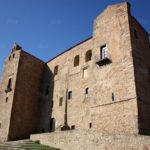
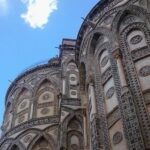
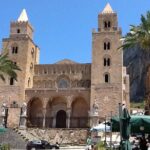
The Norman palaces, the cathedral and the hushed Capuchin catacombs.
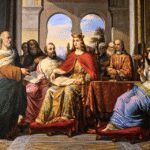
Entering the Capuchin Catacombs: what you’ll actually experience
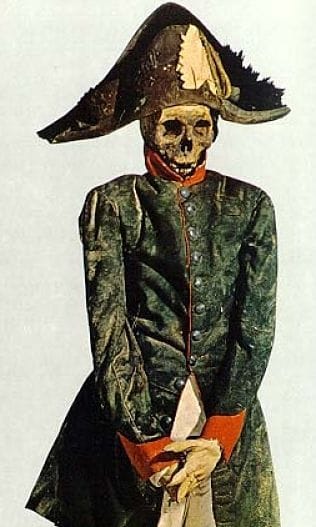
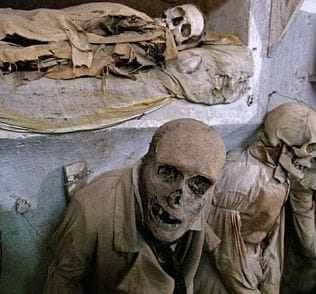
The catacombs are famed for their mummified remains, but the experience is more specific than people expect. You’ll walk through dank corridors filled with human bodies arranged in a kind of open-air museum of the dead—think “human library,” not a dramatic stage set.
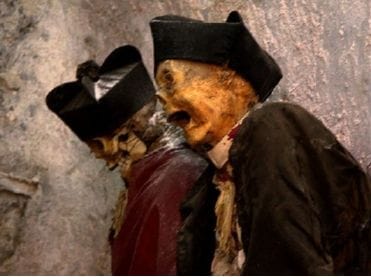
You’ll see mummies associated with different groups, including friars and other named figures. The site organizes remains into categories such as friars, virgins, and professors, and your guide helps you interpret what you’re looking at, including how remains may look different based on the context of burial.
One of the most memorable moments is often when you’re pointed to Rosalia Lombardo, described as the last person buried in the catacombs. It’s the kind of detail that makes the whole place feel timed and personal, not just macabre.
The mummification story: 1599 and the “mystery” you’ll hear about
What makes the Capuchin Catacombs more than a morbid curiosity is the origin story. The site is described as inaugurated in 1599, when Capuchin monks discovered that their catacombs contained a mysterious preservative that could mummify the dead.
Your guide’s job here matters. Without that context, you might just react to the eerie sight. With it, you start seeing why the site developed the way it did—how the catacombs became a long-term burial solution rather than a one-time accident.
You’ll also hear about scale: about 8,000 bodies were buried there, including the mummy of friar Silvestro of Gubbio, noted as the first body buried in the catacombs. That number helps you understand that this wasn’t a small experiment; it became a system.
Looking beyond the shock: categories, clothing, and symbolism
The catacombs can be visually overwhelming, so I like that the tour is built to give you handles to hold onto. You don’t just wander—you learn how to look.
For example, remains are divided by categories such as friars, virgins, and professors. You may also notice decaying clothing that helps identify what category someone belonged to. Your guide connects these visual clues to the human stories behind them, including what the Capuchins intended the site to represent.
The core message is blunt: it’s meant to reflect on the fragility of life and the smallness of worldly possessions. I don’t think you have to agree with the philosophy to appreciate what the place is doing. It’s a cemetery that turns mortality into something you can read.
The practical shift to Monreale: swapping corpses for gold and marble
After the catacombs, you travel to Monreale and the atmosphere changes fast. The tour is designed as one flowing day plan: you emerge from corridors of human remains and then swap them for the visual feast of Monreale Cathedral.
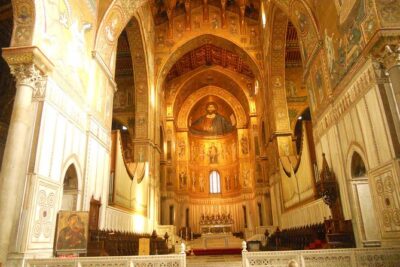
Monreale is a short ride—again, about 6 miles (10 km)—so you don’t waste half your day in transit. Once you arrive, you’re stepping into a 12th-century Arab-Norman Cathedral, widely recognized for how well it represents that hybrid style.
This is where your guide’s pacing really pays off. If you were going solo, you’d likely spend more time figuring out what’s most important. Here, you get a structured route so you can focus on the architecture and the logic of the building rather than just taking photos.
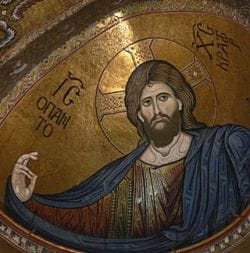
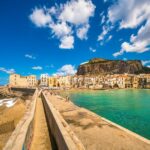
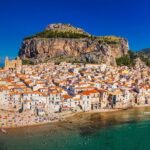
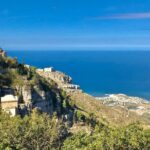
Out to the golden mosaics of Monreale and seaside Cefalu.

Benedictine Cloister garden: the calmer ending you’ll be glad for
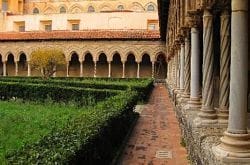
The tour finishes at the Benedictine Cloister, completed at the turn of the 13th century. If the catacombs feel like a punch to the senses, the cloister is a release.
You’ll wander the garden surrounded by delicate arches and white marble columns. Even if you’ve got your guard up after the catacombs, this stop helps reset your body. It’s not just pretty—it’s functional. It gives you a chance to talk about what you saw, digest the meaning, and take in Monreale at a slower speed.
If you’re sensitive to the subject matter, this cloister moment is a practical win. It makes the whole tour feel less like a shock-and-leave day.
Skip-the-line, private car, and the “3-hour reality check”
This is a private tour with a private car and an English-speaking driver. The private format matters for two reasons.
First, your meeting point is straightforward: Piazza Verdi, at the stairs of the Theatre Massimo. You’re not hunting for vague entrances.
Second, private transport helps you stay on schedule through busy Palermo streets. You also return to the meeting point at the end.
Now for the reality check: the listed duration is 3 hours, and that’s not a lot once you factor in travel time and time spent inside two major sites. It can still be a great value, but you should expect a focused route rather than leisurely wandering.
There’s another point to plan around: entry to the Catacombs of Capuchins, Monreale Cathedral, and the Cloister isn’t included. Even though you’ll get skip-the-line access via a separate entrance, you still need to budget for admission.
Price and value: is $249.23 per person worth it?
At $249.23 per person, this isn’t a budget add-on. So let’s talk value in real terms: what you’re paying for is speed, interpretation, and frictionless logistics.
You’re buying:
- A private car with an English-speaking driver, so you’re not managing transport or timing between Palermo and Monreale.
- A guide to explain the catacombs’ organizing logic—categories, the 1599 preservative origin story, and why certain remains matter (like Rosalia Lombardo).
- Skip-the-line entry through a separate entrance.
You’re also paying a premium for the format. Some people feel the tour can be pricey if the Monreale time feels short or if the cathedral is under renovation at the time of your visit. The good news is that the private structure still tends to keep your day smoother than going totally on your own.
If you’re the type who enjoys being told what to look for—and who doesn’t want to spend energy on logistics—this price can make sense.
Who this tour suits best (and who might not enjoy it)
This tour is for you if you:
- Want guided context rather than wandering in silence through intense sites.
- Like architectural “contrast days,” where one place is dark and the next is beautifully built.
- Are comfortable with a subject that’s intense and visually graphic.
It’s not a good fit if you have mobility limits. The tour is not suitable for people with mobility impairments.
Dress matters too. Sleeveless shirts aren’t allowed, so bring a shirt or layer that follows the rule. It’s the kind of detail that can save you from a frustrating entry moment.
Choosing your guide experience: what the best hosts add
The tour is private, so the guide makes a visible difference. Past participants highlighted guides such as Roberta, Patrizia, Anna María, and Alessandra for strong communication and strong Sicily context, not just facts about the monuments.
What stands out in those comments is not only what the guides teach, but how they teach it. The better hosts help you connect catacombs details—like categories and specific named remains—to the bigger message of the site. They also help you understand Monreale’s architecture in ways that make the cathedral feel earned, not random.
Some guides also add small extras after the tour, like food suggestions or a locally rooted stop (one comment mentions a meal). Those extras aren’t guaranteed, but they show what kind of operator you’re likely booking: people who take the day seriously.
Should you book this Palermo and Monreale private tour?
Book it if you want a high-impact day with minimal hassle: catacombs with a clear narrative and Monreale with architectural focus, capped by a serene cloister garden.
Skip it (or rethink) if you’re price-sensitive and you want a slower pace in Monreale, or if the idea of mummified remains will genuinely overwhelm you. Also, since ticket entry is extra and you only have 3 hours, you should be comfortable with a tour that stays structured.
If you fit the target—curious, comfortable with history that’s a little unsettling, and eager to see Monreale without planning stress—this is a solid way to experience two of Sicily’s most memorable contrasts in one afternoon.
FAQ
Where does the tour start?
It starts at Piazza Verdi, at the stairs of the Theatre Massimo.
How long is the tour?
The tour duration is 3 hours (starting times depend on availability).
Is this a private tour?
Yes, it’s a private group experience.
What’s included in the price?
The tour includes a private car and an English-speaking driver.
Are entry tickets included?
No. Entry to the Capuchin Catacombs, Monreale Cathedral, and the Cloister of Monreale is not included.
Is the tour suitable for mobility impairments?
No. The tour is not suitable for people with mobility impairments.
More Tour Reviews in Palermo


More Monreale and Cefalu Days
More Palermo Cathedral and Palace Tours
After something else? More tours and day trips around Palermo and western Sicily





Palermo Cathedral, Catacombs & Norman Palaces, compared.
 ★ 4.5Teatro Massimo Opera House Guided TourFrom $141,573 reviews
 ★ 5.0Palazzo Conte FedericoFrom $18650 reviews
 ★ 4.7Norman Palace and Palatine Chapel Tour with TicketsFrom $82298 reviews
 ★ 4.8Cappella Palatina and Palazzo dei Normanni TourFrom $45214 reviews
 ★ 4.8Tour Cappella Palatina e palazzo Reale: patrimonio UnescoFrom $14183 reviews
 ★ 4.5Norman Palace & Palatine Chapel – Small Group or PrivateFrom $8173 reviews
 ★ 5.0The Godfather Origins of Mafia: Corleone & Visit Monreale DuomoFrom $29873 reviews
 ★ 4.5Palermo Catacombs and Monreale Half-day TourFrom $57643 reviews
Browse the lists this tour appears in