
Reviewed · PALERMO CATHEDRAL, CATACOMBS & NORMAN PALACES
Monreale: Guided tour of Cathedral, Monastery and Mosaics
Gold mosaics in Monreale hit like a visual megaphone. This guided tour of Monreale Cathedral zeroes in on the 12th-century masterpiece and its UNESCO World Heritage status (listed in 2012), plus the Benedictine monastery and cloisters right beside it. I really like that the visit comes with clear context, including how the Normans connect into Palermo’s story, not just a list of dates. One thing to plan for: you’ll need to purchase the cathedral and cloister tickets yourself, since they’re not included.
You’ll start at the cathedral entrance in Monreale and move through the key spaces in about an hour, with enough time to actually look at details instead of rushing past them. I also like the payoff at the end: a viewpoint over the Conca d’Oro valley—famous for its orange and citrus groves—so the tour doesn’t end with only indoor beauty. The main consideration is simple: the schedule is short, so if you want extra time inside specific chapels or photo stops, this may feel brisk.
If you’re coming from Palermo and you want one well-focused outing, this is a strong way to do it. Just be ready for a condensed route: cathedral first, then monastery/cloisters, then the valley view.
In This Review
- Key highlights worth timing around
- Why Monreale Cathedral’s Mosaics Feel So Specific (Not Generic)
- The 1-Hour Flow: What You’ll Do, in the Right Order
- Entering the Cathedral: Bronze Doors and What They Signal
- The Mosaics Inside: How to See the Christ Pantocrator (Without Feeling Lost)
- The Norman Connection: Why the Explanations Matter
- The Benedictine Monastery and Cloisters Next Door
- The View Over the Conca d’Oro: Orange Groves as a Backdrop
- Price and Value: What $344.39 Buys You (Private Group Edition)
- Logistics You’ll Actually Feel During the Tour
- Who This Monreale Tour Fits Best
- Should You Book This Guided Cathedral, Monastery, and Mosaics Tour?
- FAQ
- Where does the Monreale guided tour start?
- How long is the tour?
- What is included in the price?
- What tickets do I need to buy separately?
- Is hotel pickup or drop-off included?
- Is this a private group tour?
- What languages are available for the guide?
- What happens at the end of the tour?
- Is free cancellation available?
- Can I reserve and pay later?
Key highlights worth timing around
- UNESCO-listed Monreale Cathedral: the big-ticket sight, guided and explained
- Golden mosaics with the Christ Pantocrator as the visual centerpiece
- Bronze doors by Bonanno da Pisa and Barisano di Trani—great context for what you’re seeing
- Benedictine monastery and cloisters next to the cathedral, not as an afterthought
- Viewpoint over the Conca d’Oro for the orange-and-citrus landscape perspective
- Private group format (up to 25) makes the pace feel controlled
Why Monreale Cathedral’s Mosaics Feel So Specific (Not Generic)
Monreale is only about 5 kilometers from Palermo, but it’s not a “Palermo add-on” kind of town. It sits up on the hill of Mount Caputo, around 310 meters above sea level, so you get that sense of being above the world as soon as you’re there. The cathedral is the reason visitors make the trip, and the mosaics are why people remember it.
What I like most is the way the guide frames the cathedral as a meeting point of styles. The building is 12th-century, but it doesn’t feel like one single aesthetic. Instead, you see links between northern European architecture, Romanesque art, and Arabic art—so it doesn’t read like a single culture stamp. It’s a result of Sicily’s history: different influences showing up in the same place, working together, and then turning into something visually unforgettable.
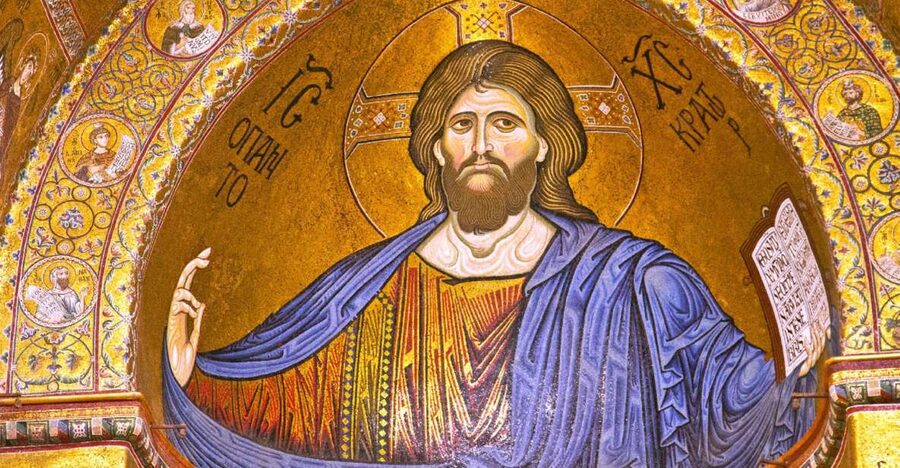
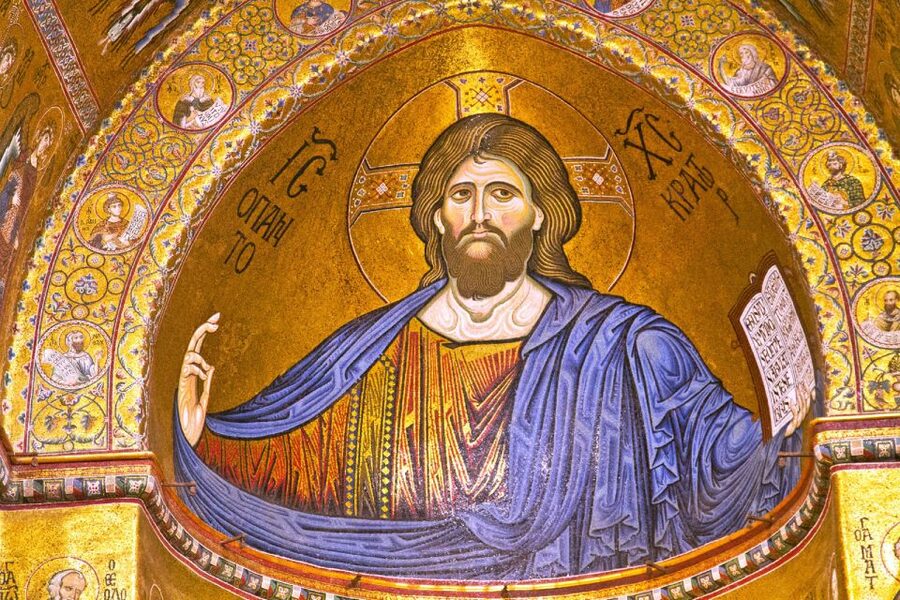
And inside, the tour focuses you toward the main iconography instead of letting you wander blindly. The mosaics culminate in the Christ Pantocrator in the apse basin, which is basically the ceiling-to-floor focal point the cathedral is built around. If you want to understand what you’re looking at before you look, this tour structure helps.
The Norman palaces, the cathedral and the hushed Capuchin catacombs.
The 1-Hour Flow: What You’ll Do, in the Right Order
This is a short tour—about 1 hour—so the timing matters. The route is designed to get you to the most important parts first, starting from the cathedral. You’ll meet at the Piazza Guglielmo II suare at the Monreale cathedral entrance, and you return back there when the tour ends.
That order is smart. Monreale Cathedral is the “why,” so it comes first while your attention is at full power. Then you shift from the visual intensity of the mosaics to the quieter Benedictine spaces—monastery and cloisters—where the atmosphere changes from gold sparkle to stone calm. The final viewpoint over the valley is the palate cleanser: it gives you the outdoor geography that helps the whole experience make sense.
Short tours can feel limiting, sure. But here, the itinerary is compact in a way that actually fits Monreale’s strengths. You’re not trying to see everything in town—you’re seeing the cathedral complex in a way that you can remember.
Entering the Cathedral: Bronze Doors and What They Signal
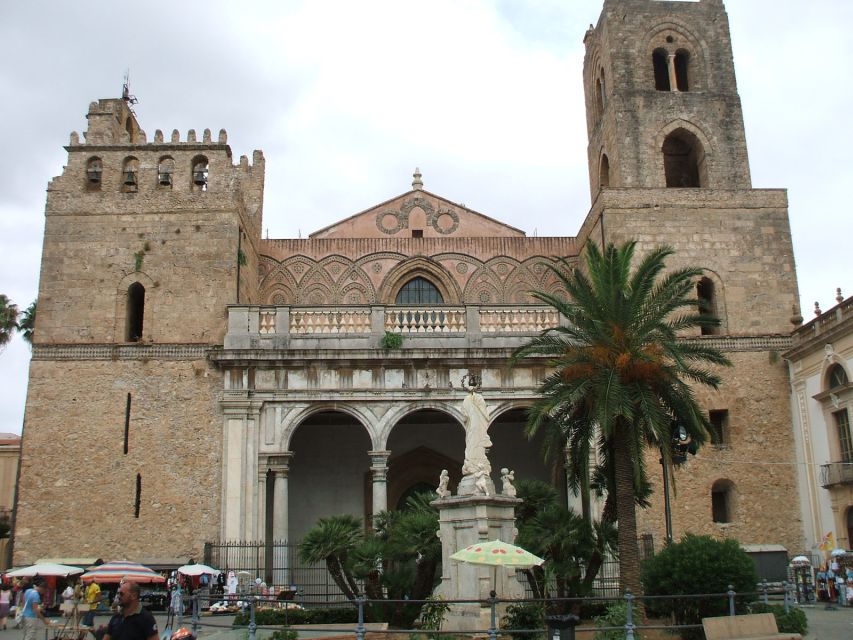
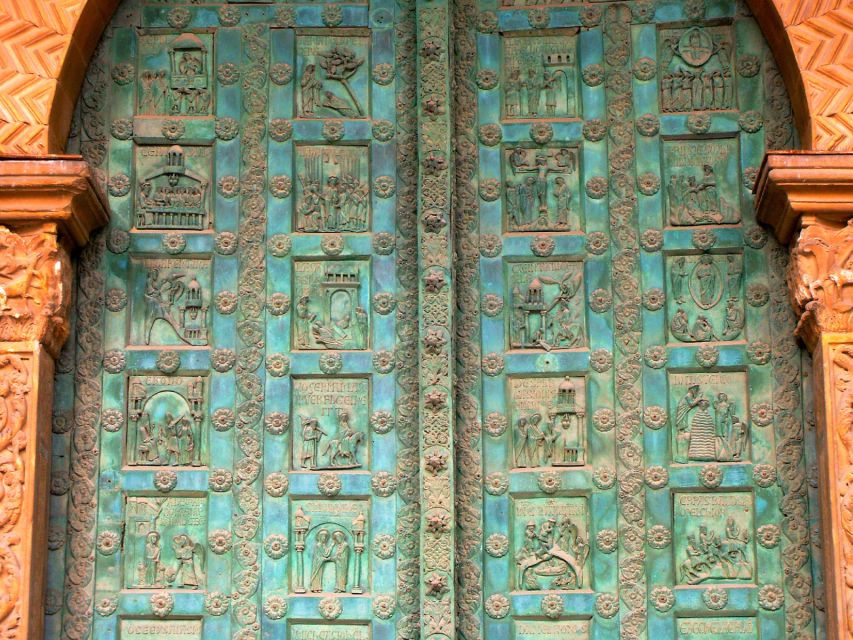
Before you get lost in the gold surfaces, take a moment for the outside details the tour highlights. The cathedral exterior is described as richly decorated, and the tour points you to two bronze doors that matter historically and artistically.
One door is attributed to Bonanno da Pisa, and the other is by Barisano di Trani. Barisano di Trani’s name is also connected to the doors of the cathedrals of Ravello and Trani, so the guide can help you see Monreale as part of a wider network of medieval artistic work—not just an isolated stop.
Even if you’re not a door-spotter, this is a useful warm-up. It gives you an entry point to interpret the cathedral rather than just admire it. Sicily’s position in the Mediterranean shows up everywhere here, and those metal doors act like a preface to what the interior will do to your eyes.
The Mosaics Inside: How to See the Christ Pantocrator (Without Feeling Lost)
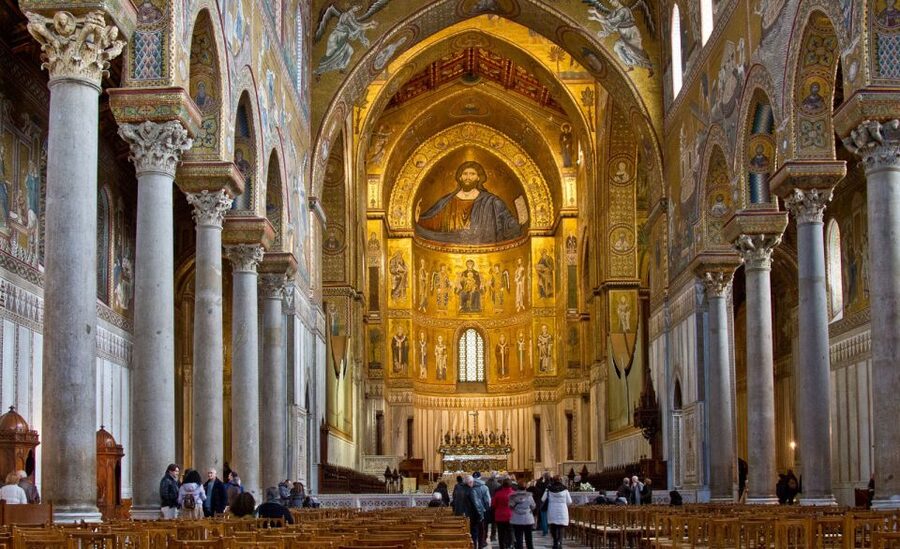
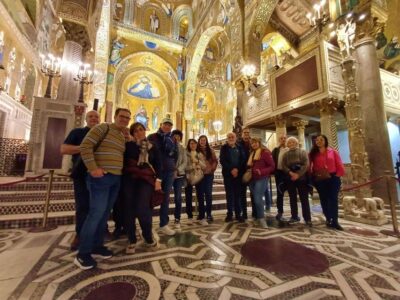
Inside, the tour zeroes in on the central composition. The cathedral interior is illuminated by gold mosaics, and the key destination is the Christ Pantocrator in the apse basin.
Here’s the practical value: without a guide, it’s easy to admire mosaics as a whole and miss the “story told by placement.” With guidance, you can track the main figure and understand why it’s where it is. In a cathedral like this, the architecture and imagery work together like a diagram: sightlines, focal points, and symbolism are planned.
You’ll likely notice that the mosaics aren’t just decoration. They’re structured into a coherent visual program, which is part of why the cathedral is UNESCO World Heritage. The guide’s job is to keep you from treating every surface as equal attention. When the tour leads you to the Pantocrator as the highest expression of figurative art, it turns scattered glitter into one clear image.
The Norman Connection: Why the Explanations Matter
The cathedral gets most of the headlines, but the guide context is often what makes the tour worth it. One guide mentioned in feedback—Margherita—is praised for explaining the historical significance and, specifically, how the Normans fit into Palermo’s broader story.
That matters because it changes what Monreale feels like. Instead of thinking of the mosaics as purely “old art,” you start seeing them as the visual language of a place where rulers, cultures, and ideas overlapped. This is also where the cathedral’s style mix becomes meaningful. Northern European architecture, Romanesque art, and Arabic art aren’t random ingredients. They map onto Sicily’s role as a crossroads.
If you like tours where you leave with context you can actually use—things you can point to later—this is a good match.
The Benedictine Monastery and Cloisters Next Door
After the cathedral, you shift to the ancient Benedictine monastery and cloister, which flank the cathedral. This is one of those smart contrasts: the cathedral hits hard visually, and then the cloisters let you slow down.
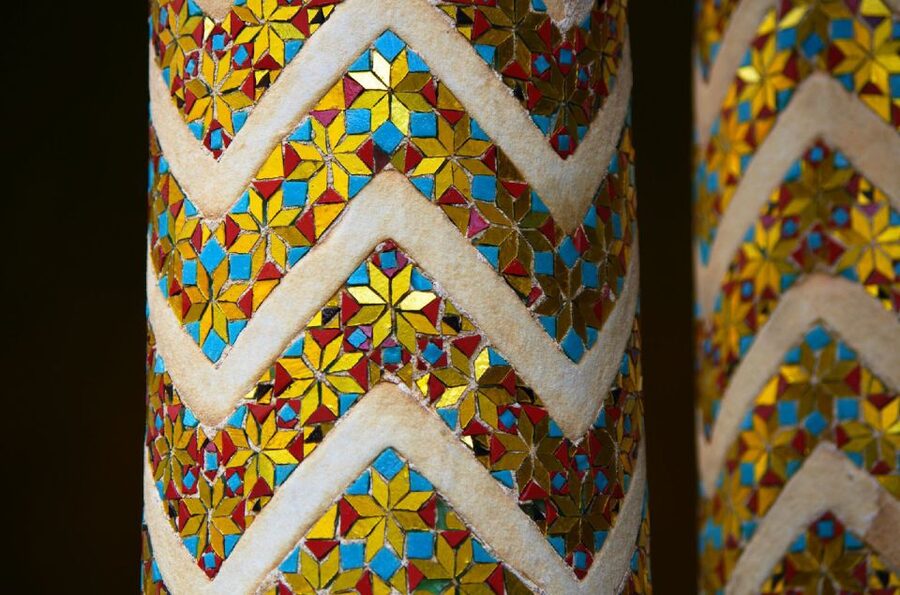
Cloisters have a way of doing that. Even without extra architectural trivia, they tend to make you pay attention to space—light falling, stone edges, the rhythm of columns, and the feeling of enclosed calm. When you see them as part of a functioning religious complex instead of a “bonus stop,” the experience feels more complete.
This part of the tour is also about avoiding the common mistake on big sightseeing days: spending all your time in the main attraction and then barely registering what’s next to it. Monreale’s layout makes the cloisters easy to overlook, but the tour gives them their due.
The View Over the Conca d’Oro: Orange Groves as a Backdrop
The tour isn’t only about indoor art. It ends with a viewpoint overlooking the Conca d’Oro valley. The name points to the “golden basin” character of the landscape—especially with orange and citrus groves.
This is more than a scenic pause. The view helps you connect Monreale to the region it belongs to. When you look over the valley, you understand why this hill town became such an important cultural and religious center. You also get a sense of the “working landscape” context—food production and agriculture—rather than imagining Sicily as only monuments and museums.
In practical terms, it’s also a nice way to finish a short tour. You wrap up with fresh air and a wider frame, which makes the cathedral mosaics feel even more vivid when you think back on them later.
Price and Value: What $344.39 Buys You (Private Group Edition)
The price is $344.39 per group, up to 25 people, for a 1-hour guided experience. That sounds like a “group” price, and it is—but it’s also why the value can be good.
Here’s how I think about it as you plan: you’re paying for a licensed guide to connect the dots between the cathedral’s artistry, the monastery/cloisters, and the view. Because this is a private group format, your time isn’t diluted by a large crowd’s pace. In a one-hour tour, that matters; you don’t want your “best moments” eaten up by waiting or confusion.
What isn’t included is important for budgeting: cathedral and cloister tickets aren’t part of the price, and food/drink and hotel pickup/drop-off aren’t included either. So the best value depends on how you handle those add-ons. If you’re already planning to buy tickets and you’re able to make your own way to the meeting point, this private-guided format can be a cost-effective way to get real interpretation, not just sightseeing.
Logistics You’ll Actually Feel During the Tour
This one is straightforward, but there are a few details you’ll want to know so the hour stays smooth.
First, you meet at the Monreale cathedral entrance area: Piazza Guglielmo II suare. Second, the tour ends back at that same meeting point. Third, there’s no hotel pickup or drop-off, so you’ll want to plan your transportation from Palermo or wherever you’re staying.
Also note the languages offered for the live guide: Spanish, English, French, and Italian. If you’re traveling with a specific language preference, it’s worth checking availability for your preferred time slot.
Finally, remember the tour duration is about one hour. That’s long enough to understand the main artistic and historical beats, but short enough that you’ll want to skip extra wandering. If you love slow travel, consider adding time before or after on your own.
Who This Monreale Tour Fits Best
This guided Monreale experience is ideal if you:
- Want a focused cathedral-and-complex visit without planning every detail
- Like tours that explain why styles mix (north European, Romanesque, Arabic influences) rather than only describing what you see
- Want the quick payoff of a view over the Conca d’Oro at the end
- Are traveling in a group format where a private guide keeps the pace comfortable
If you’re the kind of visitor who likes to study mosaics for a long time, you might feel slightly rushed during the one-hour window. But as a first (or only) Monreale outing, this is well-paced and built around the key moments that make Monreale famous.
Should You Book This Guided Cathedral, Monastery, and Mosaics Tour?
I’d book this if you want a high-impact Monreale visit that stays organized: cathedral first for the mosaics and Pantocrator, then Benedictine monastery and cloisters, then the valley view. The strongest reason is the guided interpretation, including the kind of historical explanation tied to the Normans and Palermo’s larger story.
I’d skip it or pair it with extra time if you’re aiming for a long, slow art deep-reading session. This tour is designed for clarity and momentum, not for lingering in every corner.
If you’re ready to make Monreale count in a limited window, this one-hour guided format is a practical, value-minded choice.
FAQ
Where does the Monreale guided tour start?
The tour starts at Piazza Guglielmo II suare, at the Monreale cathedral entrance.
How long is the tour?
The duration is 1 hour.
What is included in the price?
The only included item listed is a licensed guide.
What tickets do I need to buy separately?
You’ll need to purchase the cathedral and cloister ticket, since tickets are not included.
Is hotel pickup or drop-off included?
No. Hotel pickup and drop-off are not included.
Is this a private group tour?
Yes. The activity is listed as a private group.
What languages are available for the guide?
The live tour guide is offered in Spanish, English, French, and Italian.
What happens at the end of the tour?
The tour ends back at the same meeting point where it started.
Is free cancellation available?
Yes. You can cancel up to 24 hours in advance for a full refund.
Can I reserve and pay later?
Yes. The option is Reserve now & pay later, meaning you can book your spot and pay nothing today.
More Tour Reviews in Monreale
More Monreale and Cefalu Days
More Palermo Cathedral and Palace Tours
After something else? More tours and day trips around Palermo and western Sicily
Palermo Cathedral, Catacombs & Norman Palaces, compared.
 ★ 4.5Teatro Massimo Opera House Guided TourFrom $141,573 reviews
 ★ 5.0Palazzo Conte FedericoFrom $18650 reviews
 ★ 4.7Norman Palace and Palatine Chapel Tour with TicketsFrom $82298 reviews
 ★ 4.8Cappella Palatina and Palazzo dei Normanni TourFrom $45214 reviews
 ★ 4.8Tour Cappella Palatina e palazzo Reale: patrimonio UnescoFrom $14183 reviews
 ★ 4.5Norman Palace & Palatine Chapel – Small Group or PrivateFrom $8173 reviews
 ★ 5.0The Godfather Origins of Mafia: Corleone & Visit Monreale DuomoFrom $29873 reviews
 ★ 4.6Capuchin Catacombs and Monreale Cathedral Private TourFrom $24963 reviews
Browse the lists this tour appears in